Key takeaways
- Detection identifies whether there is a leak and where it most likely is. Repair fixes the pipe.
- They are distinct activities and are often priced and performed separately.
- Always confirm in writing what a quote includes before authorizing work.
When you suspect a slab leak, it is easy to think of "the slab leak job" as one thing. In reality there are several distinct steps, each with its own purpose, skills, and costs. Understanding them helps you compare quotes fairly, avoid paying for work you do not need, and make a better long-term decision.
The steps from suspicion to resolution
- IdentifyIs there a leak, and is it on a line under the slab?
- LocateNarrow down where along the line water is escaping.
- ConfirmCross-check findings and explain confidence.
- RepairChoose and carry out a repair method.
- RestoreAssess and repair resulting damage.
Steps 1–3 are detection. Steps 4–5 are repair and restoration, which are often handled by different trades.
1. Identifying a suspected leak
This first step answers a basic question: is water actually escaping, and could it be from a line beneath the floor? It typically involves reviewing your symptoms, checking fixtures, reading the water meter, and isolating sections of plumbing to see whether pressure drops. Many suspected slab leaks turn out to be something else at this stage — a toilet, irrigation, or a visible connection.
2. Locating the likely leak area
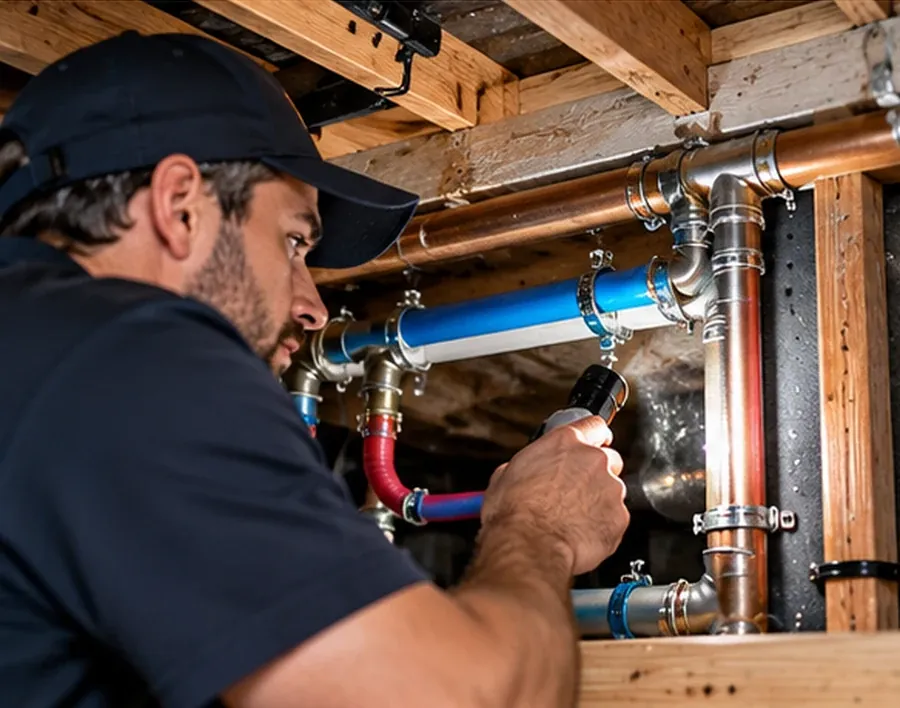
If a hidden supply leak is confirmed, the next goal is to narrow down where it is. Technicians use tools such as acoustic listening equipment and electronic leak detection, often combined with line tracing to understand where the pipe actually runs. The result is usually a marked area on the floor representing the most likely leak location.
3. Confirming and communicating findings
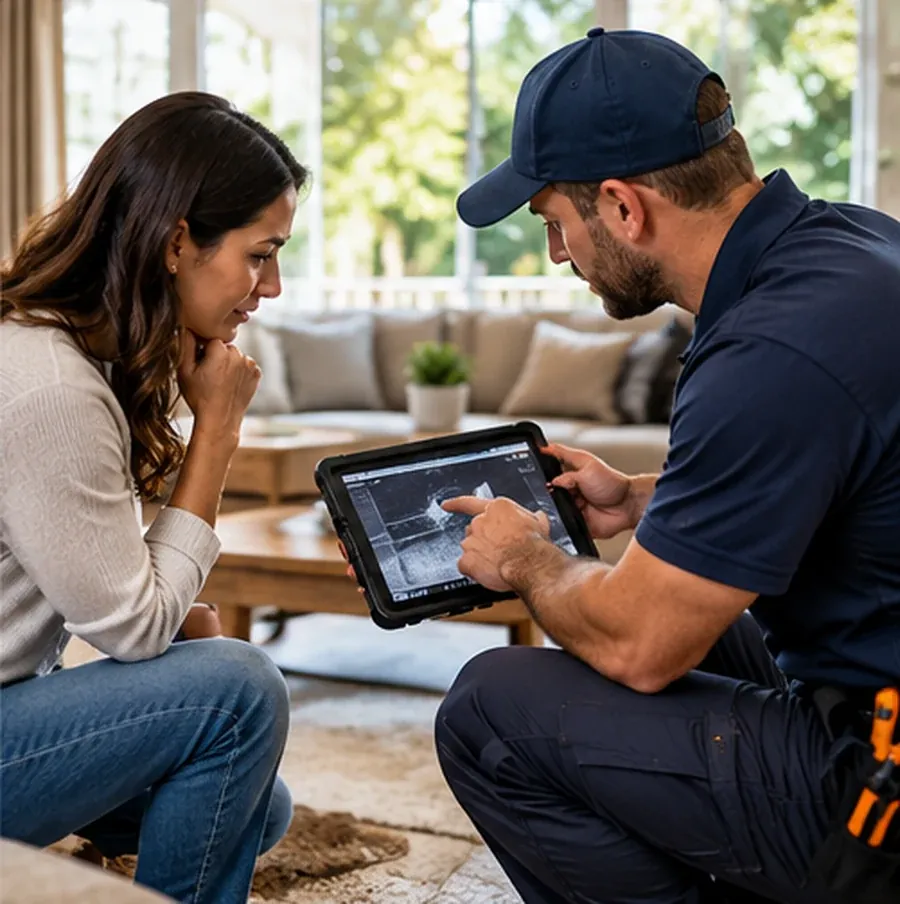
Good detection includes an explanation: which line is affected, how the location was determined, whether multiple methods agreed, and any factors that could affect accuracy. This is your evidence when you talk to a repair contractor or your insurer. For a closer look at the methods, see how professional slab leak detection works.
4. Selecting a repair method
Once the leak is located, a licensed plumbing contractor can recommend how to fix it. Common approaches include:
| Approach | What it involves | When it may make sense |
|---|---|---|
| Spot repair (direct access) | Opening the floor and slab at the leak, repairing the pipe section, then restoring concrete and flooring | An isolated defect on an otherwise sound line, in an accessible location |
| Reroute | Abandoning the leaking section under the slab and running a new line through walls, attic, or ceiling | Lines with signs of widespread wear, or where breaking the slab would be very disruptive |
| Repipe | Replacing larger portions of the plumbing system | Multiple past leaks or a system near the end of its service life |
| Pipe lining | Coating the inside of an existing pipe (availability and suitability vary) | Specific situations; ask a qualified contractor about limitations |
Each option has trade-offs in cost, disruption, and long-term reliability. Understanding what caused the leak can help you choose.
5. Carrying out the repair
The repair itself should be performed by an appropriately licensed contractor. In California, the Contractors State License Board advises consumers to verify a contractor's license and negotiate a clear written contract before work begins. Ask whether a permit is required, how the work will be inspected, what warranty applies, and who will restore the concrete and flooring.
6. Assessing resulting damage
A leak that ran for a while may have affected flooring, baseboards, cabinetry, or drywall. Assessing and repairing that damage is a separate task from fixing the pipe, and may involve flooring installers, water damage restoration professionals, or a general contractor. The EPA recommends drying water-damaged materials within 24–48 hours where possible to prevent mold growth.
Why it helps to treat detection and repair separately
- Clearer pricing. National cost guides list detection and repair as separate line items. HomeAdvisor, for example, shows detection and repair as distinct costs with very different ranges.
- Better repair decisions. An accurate location lets you compare spot repair and reroute options on equal terms.
- Less unnecessary demolition. Opening the floor in the wrong place adds cost and disruption.
- Useful documentation. Detection findings can support conversations with your insurer.
Questions to ask before you authorize work
- Does this quote cover detection only, repair only, or both?
- What exactly is included — and what is not (for example, concrete patching, flooring, drywall)?
- How was the leak location determined, and how confident are you?
- What repair options did you consider, and why do you recommend this one?
- Is a permit needed? What warranty applies?
Where we fit in
Precision Slab Leak Detection focuses on finding the problem: slab leak detection, under-slab water leak detection, and leak location and diagnostic assessments. When you call, we will be clear about what our visit includes and what it does not, so there are no surprises.
The bottom line
Detection and repair are partners, not the same thing. Detection gives you evidence; repair acts on it. Keeping the steps distinct — and asking clear questions at each one — is the best way to get a reliable fix at a fair price. Wondering about budget? Read how much slab leak detection costs.
Concerned about a possible slab leak in Whittier? Call Precision Slab Leak Detection at (562) 358-3136 to talk through what you are noticing and how an assessment would work for your property.
Frequently Asked Questions
Our focus is slab leak detection and leak-location diagnostics. If you need a repair, call us to discuss your situation and what is included — we will be clear about the scope before any work is scheduled.
That can be convenient, and many homeowners choose it. The important thing is to understand what each part costs, what evidence supports the leak location, and what repair options were considered. Separating the steps can make it easier to compare repair quotes.
No. A spot repair can be reasonable for an isolated defect on an otherwise sound line. Rerouting may be preferable when a line shows widespread wear or when access through the slab would be very disruptive. A licensed plumber can explain the trade-offs for your home.
In California, the Contractors State License Board recommends verifying a contractor's license and getting clear terms in writing. Ask about permits, warranty terms, and how flooring and concrete will be restored.
Sources
- California Contractors State License Board. Consumers — Hiring a Contractor.
- HomeAdvisor. How Much Does Slab Leak Repair Cost? (page updated June 19, 2026).
- U.S. Environmental Protection Agency. A Brief Guide to Mold, Moisture, and Your Home.
This article is general educational information, not a diagnosis of any specific property or professional plumbing, legal, insurance, or health advice. Conditions vary; consult qualified professionals for your situation.