
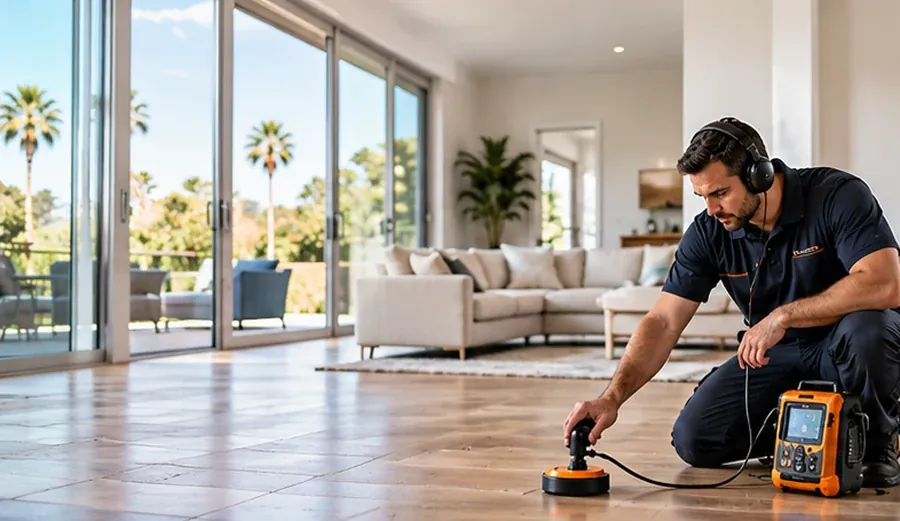
Slab Leak Detection
Investigate the signs of a possible leak beneath your concrete slab and find out where the problem is most likely located.
Water forced through a break in a pressurized pipe makes a sound. Acoustic leak detection uses sensitive ground microphones and amplifiers to follow that sound through flooring and concrete and find where it is strongest.
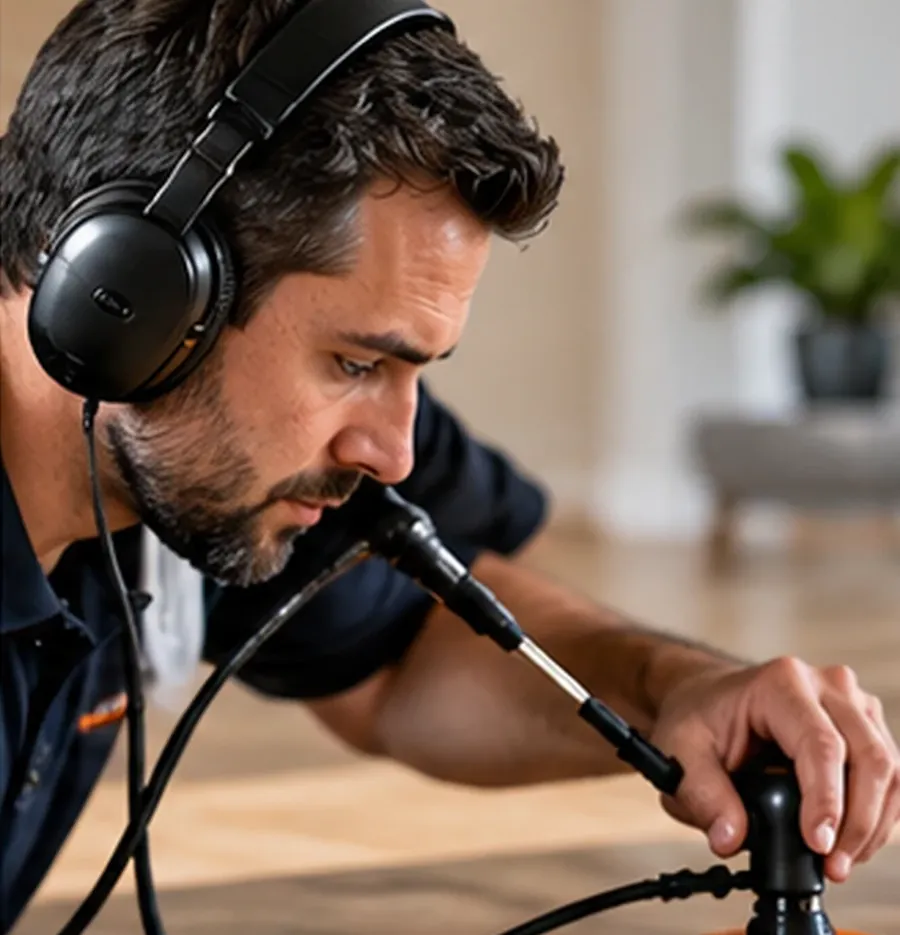
Acoustic methods are widely used for pressurized supply-line leaks, particularly when:
Acoustic detection is not the right tool for every leak. Plastic pipe and very noisy environments can limit it, so we combine methods when needed.
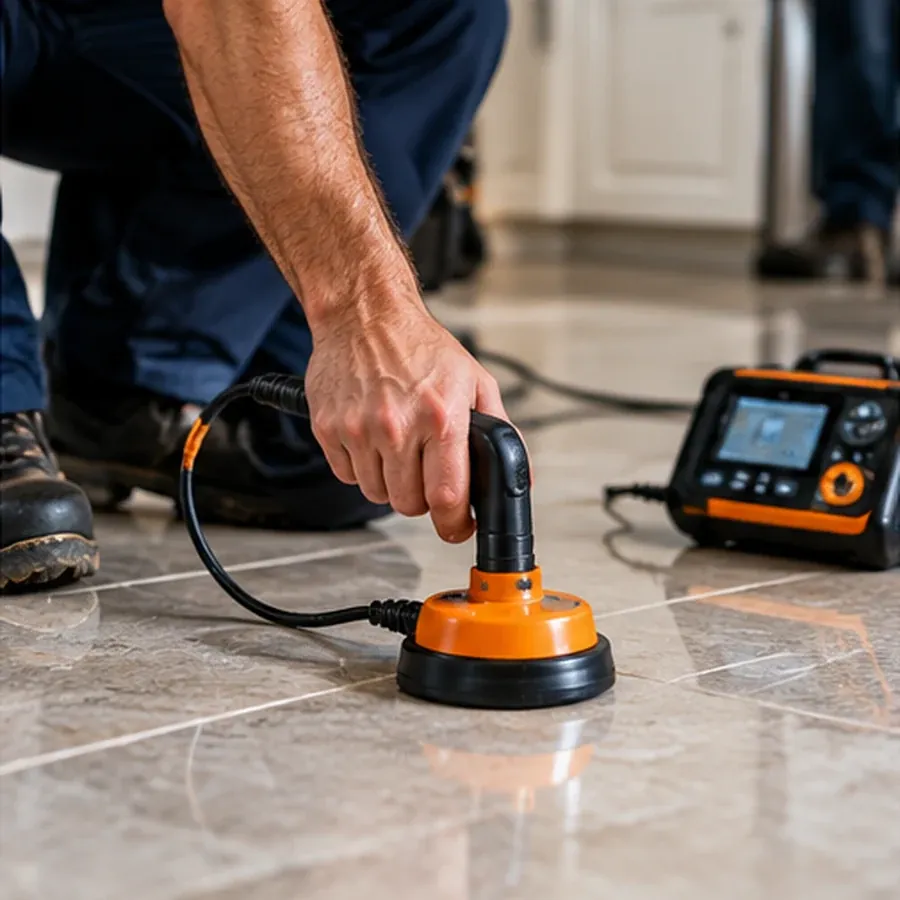
When pressurized water escapes through a crack or pinhole, it creates vibration in the pipe and the surrounding material. As the Southwest Florida Water Management District explains in describing utility leak detection, pressure forces water through a breach and sends vibrations along the pipe, and listening devices convert those vibrations into sound.
In a home, a technician places a ground microphone or contact sensor at intervals along the suspected pipe route and listens through headphones, often with an amplifier and filters. The leak area is typically where the sound is loudest and has the right character.
Pipe material matters. Dense metals such as copper transmit leak sound farther than plastic, which absorbs vibration more quickly. Flooring, depth, and background noise also play a role. That is why acoustic detection is usually part of a broader diagnostic assessment and is often paired with electronic leak detection.
Honest about limitations. Acoustic detection depends on hearing the leak. Plastic pipes, deep lines, thick padding, very small leaks, and background noise can all make that harder. We will let you know if conditions limit what acoustic methods can tell us.
Accurate detection gives you better information before any repair decision.
Listening happens from the floor surface — no opening up concrete to search.
Comparing sound at multiple points helps narrow the leak area.
Acoustic findings can confirm or refine what other methods suggest.
A step-by-step approach from your first call to clear findings.
Tell us what you are noticing, where, and when it started.
We review the symptoms and check fixtures, the water heater, and the meter.
We isolate lines and use suitable equipment to narrow down the leak area.
We explain what we found, how confident we are, and your options.
Common questions about acoustic leak detection.
It often sounds like a faint hiss, rush, or steady running-water noise. It can be hard to hear without equipment, especially through carpet and padding or in a noisy home.
It helps. We may ask you to pause appliances, fans, or the HVAC system for short periods so faint leak sounds are easier to hear.
Generally, yes, though each floor type transmits sound differently. Carpet and thick padding can dampen sound. We adjust our approach to the flooring in your home.
Very small leaks produce less sound and can be harder to locate. Combining acoustic listening with other methods improves the chances of narrowing them down.
It can be very effective in suitable conditions, but no method guarantees a precise location in every home. We explain our confidence level and any factors that could affect the result.
Related services that may be relevant to your situation.
Investigate the signs of a possible leak beneath your concrete slab and find out where the problem is most likely located.
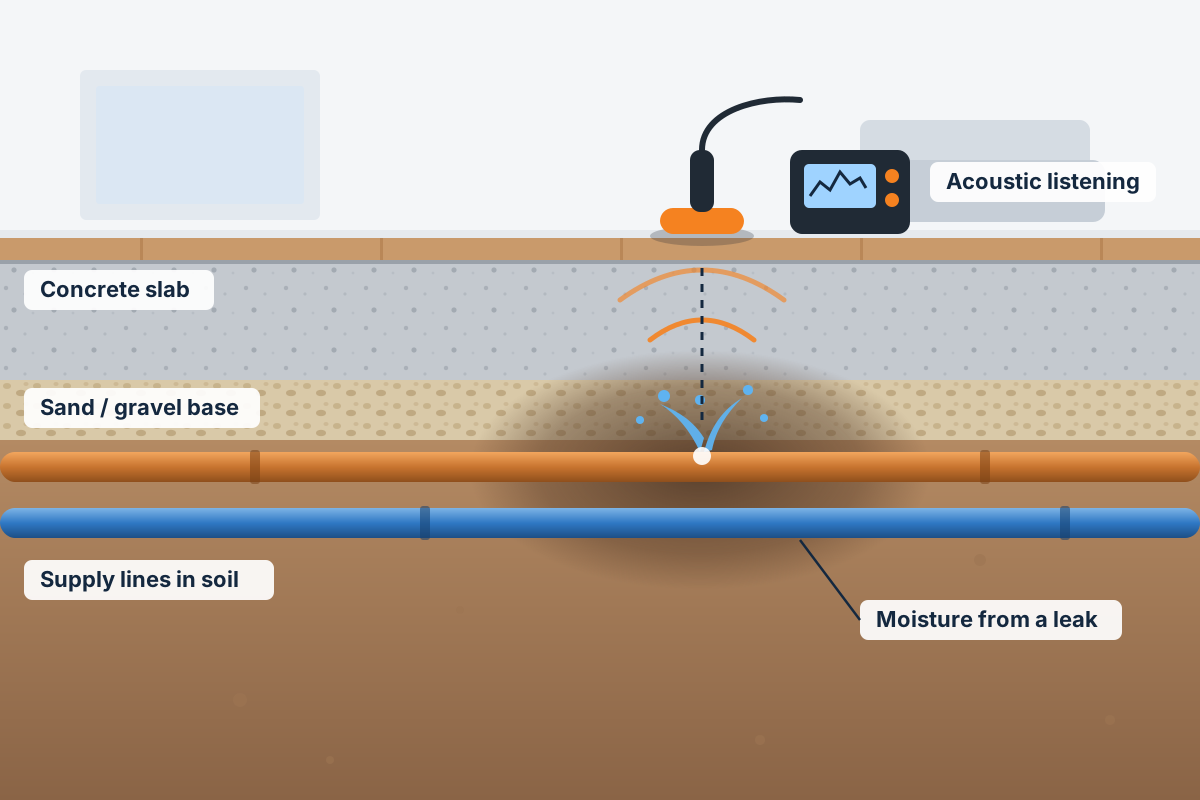
Targeted investigation of pressurized water lines that run below the foundation, to narrow down the leak area before any access work.
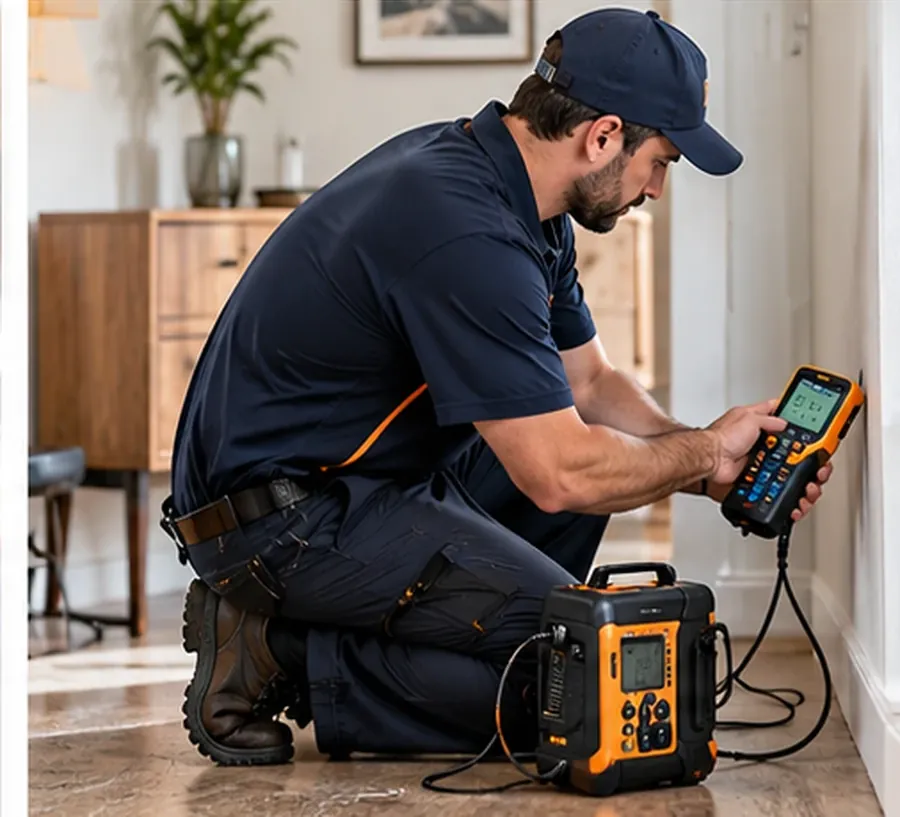
Electronic detection equipment that helps amplify and interpret leak signals that are hard to pick up without specialized tools.
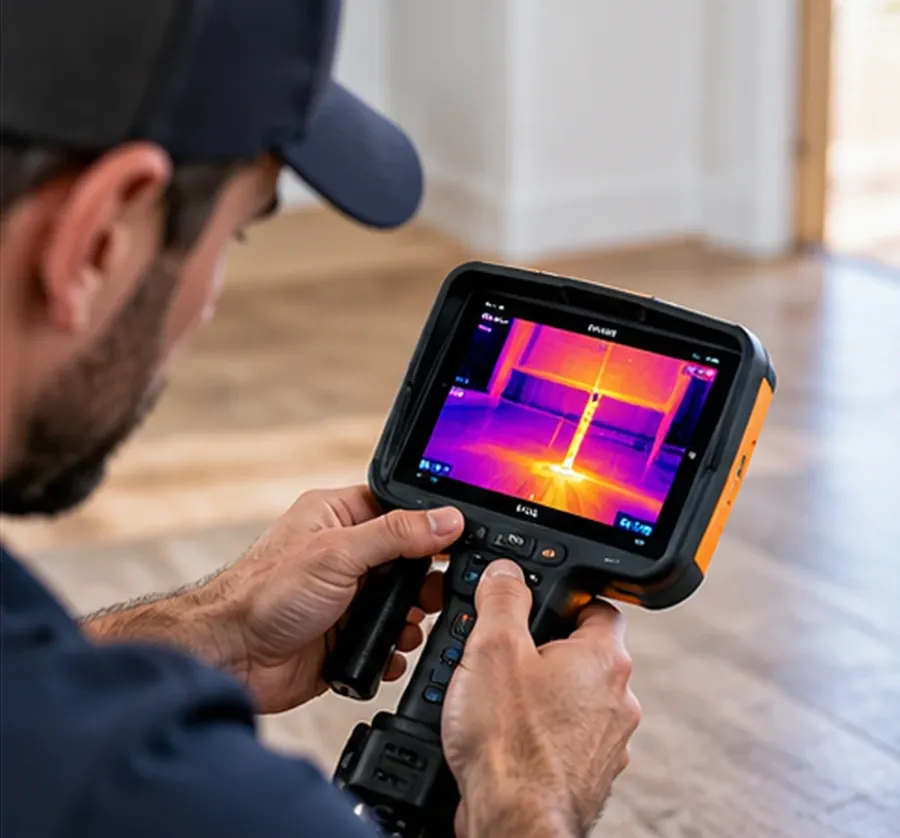
A structured assessment that brings the symptoms, plumbing layout, and test results together into clear findings and next steps.
Practical guides to help you understand what you are seeing and what comes next.
What actually happens during professional leak detection — the common methods, what each one can and cannot tell you, and why the approach varies from home to home.
A walk-through of a typical slab leak inspection, what you will be asked, how to prepare your home, and what you should have in hand when it is done.
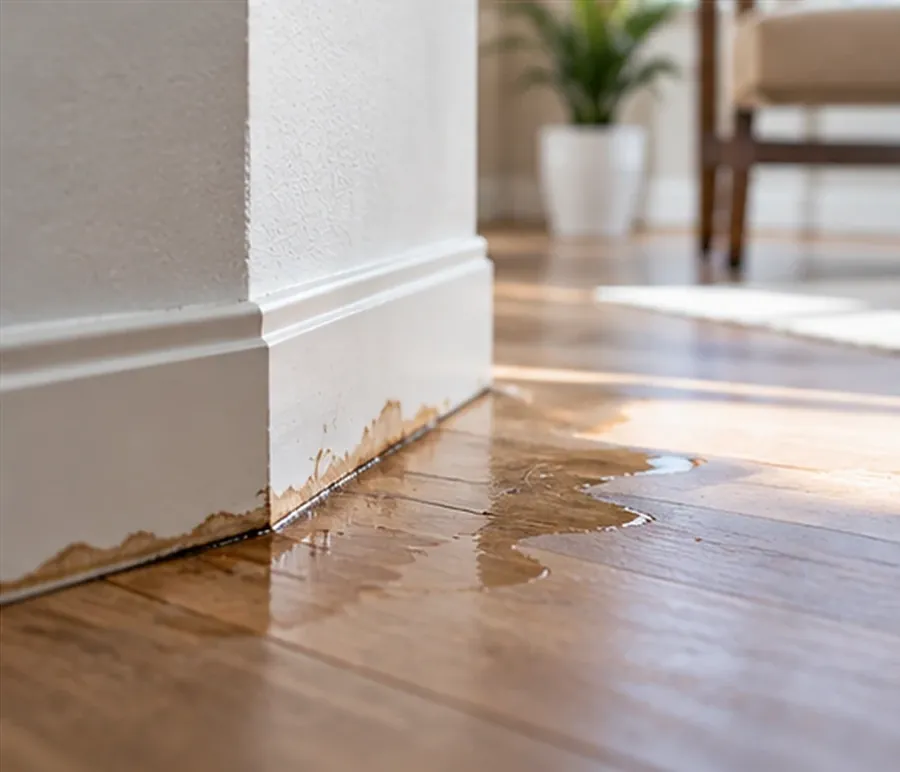
The ten symptoms most often linked to slab leaks, what each one can (and can't) tell you, and a simple way to decide when it's time for a professional assessment.
Tell us what you have noticed. We will talk through the symptoms, explain how an assessment works, and help you decide on the right next step.