Key takeaways
- Slab leaks usually result from a combination of factors rather than a single cause.
- Well-recognized contributors include corrosion, abrasion, installation problems, and pipe movement or stress.
- Which factors matter most depends on your home's pipe materials, how they were installed, your water, and the soil below.
When homeowners learn they may have a slab leak, the next question is usually "why did this happen?" The honest answer is that it depends. Lines beneath a foundation are subject to chemical, mechanical, and environmental stresses, and the leak you are dealing with is often the result of several of them working together over years.
Below we outline the causes that are generally recognized in the plumbing and building industries, and we are careful to separate what is well established from what varies from home to home.
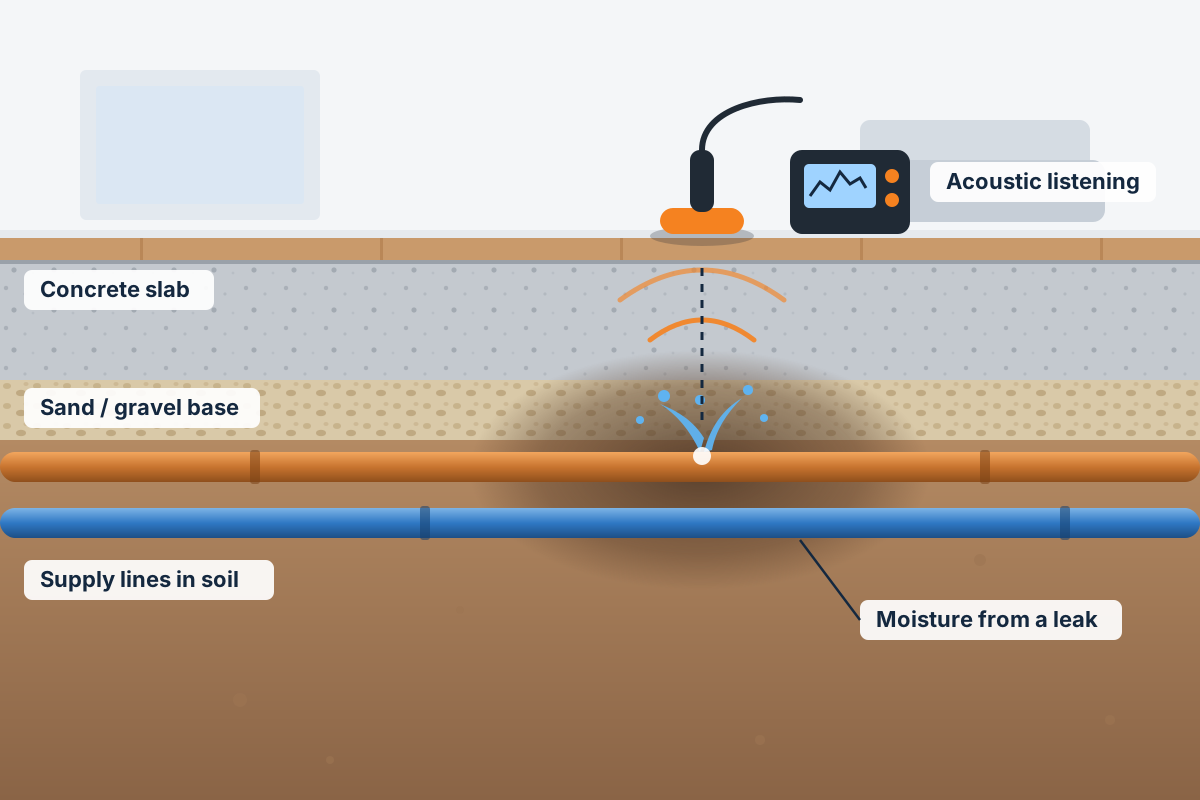
1. Corrosion and pipe wear
Metal pipes corrode over time. In copper plumbing, localized corrosion can produce small "pinhole" leaks. Corrosion can start on the inside of the pipe (driven by the water passing through it) or the outside (driven by contact with soil, moisture, or other materials).
Inside the pipe: water chemistry
Research led by Marc Edwards at Virginia Tech, reported by Science News in 2008, found that pinhole leaks in copper can be linked to water chemistry. In laboratory tests, the combination of relatively high pH and high chlorine levels was especially damaging. The same reporting described how changes in water treatment and other factors could influence corrosion, and noted preliminary findings involving certain bacteria.
What this means for you: water chemistry can contribute, but it is not something you can judge by taste or appearance, and it does not affect every home the same way. We do not assume local water is the cause of any particular leak. If you are curious about your water, your provider's annual water quality report (often called a Consumer Confidence Report) lists its measured characteristics.
Outside the pipe: contact with surrounding materials
Pipes embedded in or running beneath concrete are surrounded by soil, base material, and concrete. The Copper Development Association states that embedding copper tube in concrete is acceptable and that the interaction of copper with concrete should not by itself cause a corrosion concern. It does, however, caution against concrete mixtures high in sulfur, such as those containing cinders or fly ash, which shows that surrounding materials matter.
2. Abrasion and pipe movement
Pipes move slightly as they heat and cool. Hot-water lines in particular expand and contract every time hot water runs. Where a pipe rubs against concrete, gravel, or another pipe, that repeated movement can wear through the wall over time.
The Copper Development Association recommends allowing adequate provision for thermal expansion where tube enters or exits concrete, and protecting tube that passes through walls or floors — for example with approved tape and a sleeve — to avoid abrasion. When those details are missing, the risk of wear increases.
This is one reason hot-water lines are frequently involved in slab leaks, and why a warm spot on the floor is a classic symptom.
3. Installation-related issues
How a line was installed can matter as much as what it is made of. Examples include:
- Pipes that were kinked, dented, or bent too tightly during installation.
- Fittings or joints located beneath the slab, where they cannot be inspected later.
- Missing sleeves or protection where pipes pass through concrete.
- Contact between dissimilar metals without appropriate separation.
- Debris or sharp aggregate left in contact with the pipe.
These details are usually invisible once the slab is poured, so they are rarely confirmed until a leak is located and exposed.
4. Soil movement and stress on the pipe
Soil beneath a foundation is not perfectly static. Some clay soils shrink when dry and swell when wet. Los Angeles County's building code guidance includes specific foundation requirements for expansive soils, which tells you the issue is real enough to be addressed in design. Settlement, seismic shaking, and changes in soil moisture can all place stress on buried lines and fittings.
Whether soil movement plays a role in a specific leak depends on the site. We do not assume that all Whittier-area homes sit on expansive soil, or that soil caused any particular leak.
5. Water pressure and water hammer
High static pressure and sudden pressure surges ("water hammer," the banging you sometimes hear when a valve closes quickly) put extra stress on pipes and joints. Keeping household pressure in a normal range — typically controlled by a pressure regulator in many homes — is a sensible preventive step. A plumber can test your static pressure with a simple gauge.
6. Age and pipe material
Every pipe material has strengths and weaknesses, and every material ages. Older galvanized steel can corrode internally; copper can develop pinholes under certain conditions; plastic lines can be damaged by abrasion or improper installation. Age increases the odds that one of the factors above has had time to do its work, but a home's age alone does not predict a leak.
What is well established vs. what depends on your home
| Generally recognized | Depends on the property |
|---|---|
| Metal pipes can corrode, and corrosion can cause pinhole leaks. | Whether your water chemistry or soil contributes in your home. |
| Thermal movement can cause abrasion where pipes contact hard surfaces. | How your lines were sleeved, routed, and protected. |
| Installation quality affects long-term performance. | Whether a defect exists at the leak location. |
| Soil and structural movement can stress buried pipes. | The soil type and movement under your slab. |
Why the cause matters when deciding on repairs
Knowing why a line failed can help you and your plumber decide whether a spot repair makes sense or whether rerouting or replacing a section of line is the better long-term choice. If a single isolated defect caused the leak, a targeted repair may be reasonable. If the line shows widespread wear, another leak could follow.
That decision starts with accurate location. A targeted under-slab leak detection assessment narrows down where the water is escaping, and any repair contractor can then expose that area and examine the pipe. For the difference between finding a leak and fixing it, see slab leak detection vs. repair.
The bottom line
Slab leaks are rarely caused by one thing. Corrosion, abrasion, installation details, pressure, and soil movement all contribute to varying degrees. The useful takeaway for homeowners is not to pin down a single culprit in advance but to recognize the warning signs early and get the leak located accurately, so the repair decision is based on evidence.
Concerned about a possible slab leak in Whittier? Call Precision Slab Leak Detection at (562) 358-3136 to talk through what you are noticing and how an assessment would work for your property.
Frequently Asked Questions
Age matters because pipes, fittings, and protective coatings deteriorate over time, but age alone does not determine whether a line will leak. Pipe material, installation quality, water chemistry, and how much the pipe moves all play a role. Newer homes can develop leaks too.
Water chemistry can influence corrosion, but the relationship is complex. Research on copper pinhole leaks has linked them to specific combinations of factors such as high pH with high chlorine, rather than to hardness alone. Your water provider's annual water quality report is the best source for your local water characteristics.
Ground movement of any kind can stress buried pipes and fittings, so it is reasonable to check for leak symptoms after significant shaking. However, we do not assume that any particular leak was caused by an earthquake without evidence.
You cannot control every factor, but you can reduce risk and catch problems early: keep household water pressure within a normal range, fix fixture leaks promptly, watch your bills and meter for unexplained use, and act quickly on warning signs.
Sources
- Science News. Holey Copper Pipes! (October 29, 2008).
- Copper Development Association (copper.org). Is There a Problem With Embedding Copper Tube in Concrete?.
- County of Los Angeles Department of Public Works. Soils Investigation and Expansive Soil Requirements — Residential Code Manual, Section R401.4.
- U.S. Environmental Protection Agency. Free of Leaks — Technical Reference Manual for WaterSense Labeled Homes (EPA-832-F-23-016, July 2023).
- Foundation Performance Association. Distress Phenomena Often Mistakenly Attributed to Foundation Movement (FPA-SC-03-1).
This article is general educational information, not a diagnosis of any specific property or professional plumbing, legal, insurance, or health advice. Conditions vary; consult qualified professionals for your situation.