
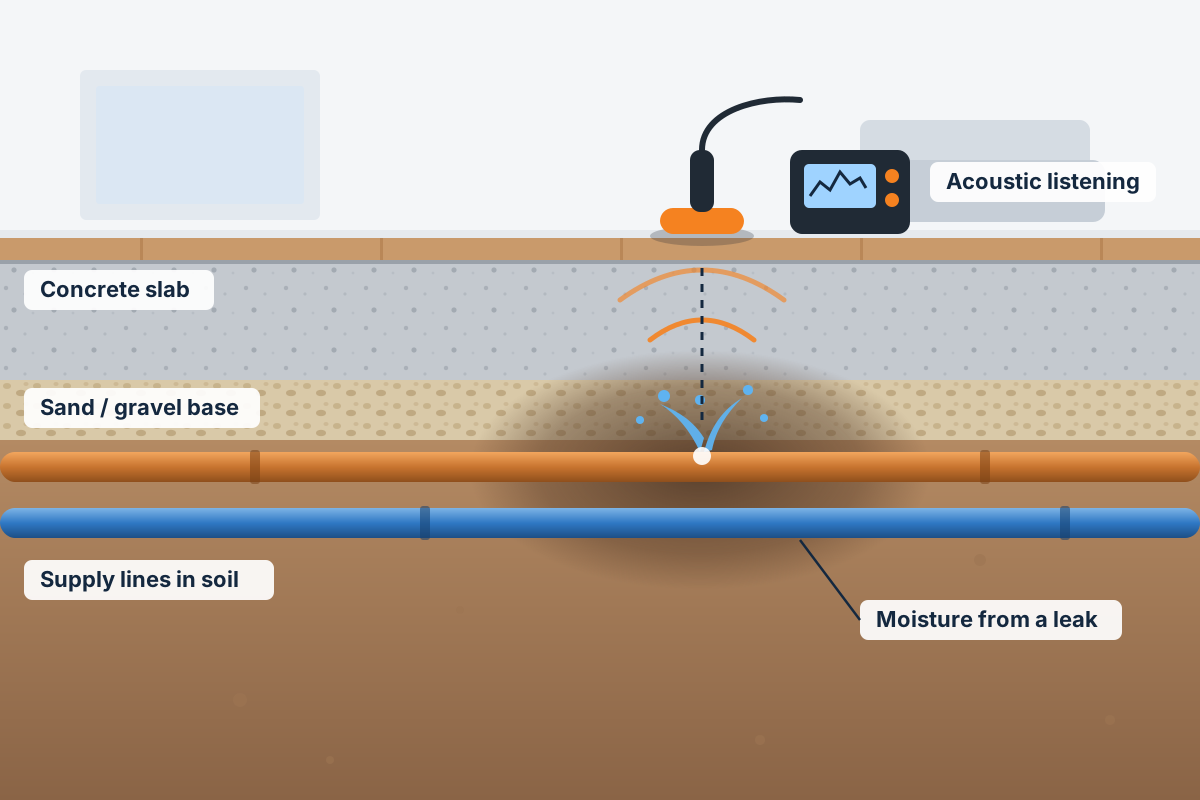
Under-Slab Water Leak Detection
Targeted investigation of pressurized water lines that run below the foundation, to narrow down the leak area before any access work.
When water may be escaping beneath your foundation, guessing is expensive. We investigate the symptoms, confirm whether a hidden leak is likely, and narrow down where it is — so any repair can be targeted instead of trial and error.
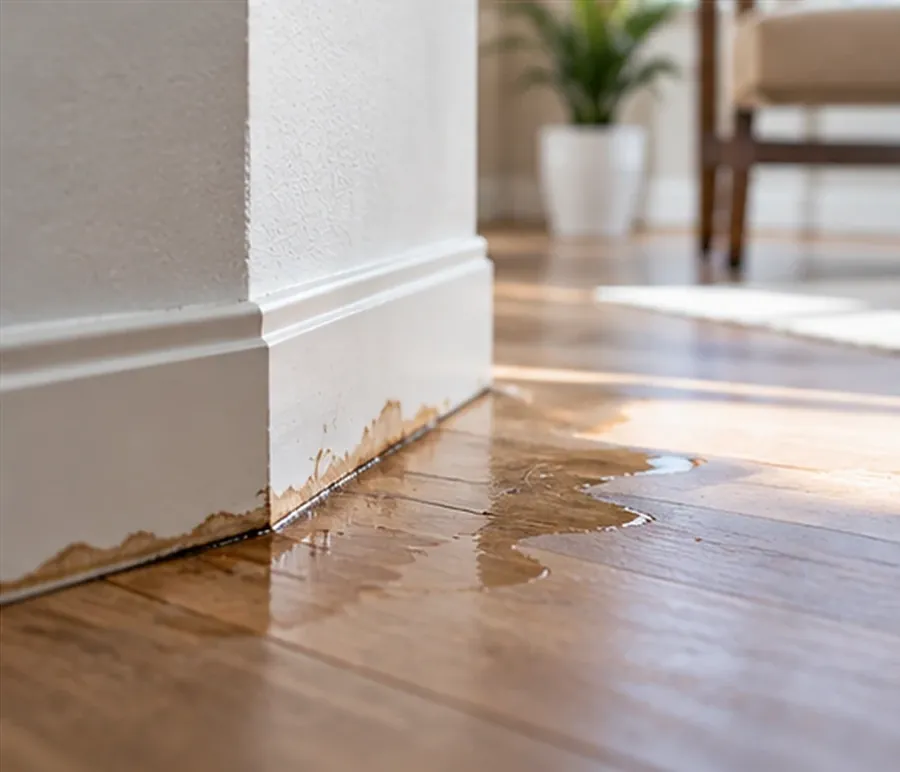
Slab leaks rarely show themselves directly. Most people call us because something has changed and they cannot find an explanation:
None of these proves a slab leak on its own. That is exactly why a proper assessment matters. Not sure? Read our guide to 10 warning signs of a slab leak.
Slab leak detection is a diagnostic service. Its job is to answer three questions: Is water escaping? Which line is it on? Where along that line is the leak most likely located?
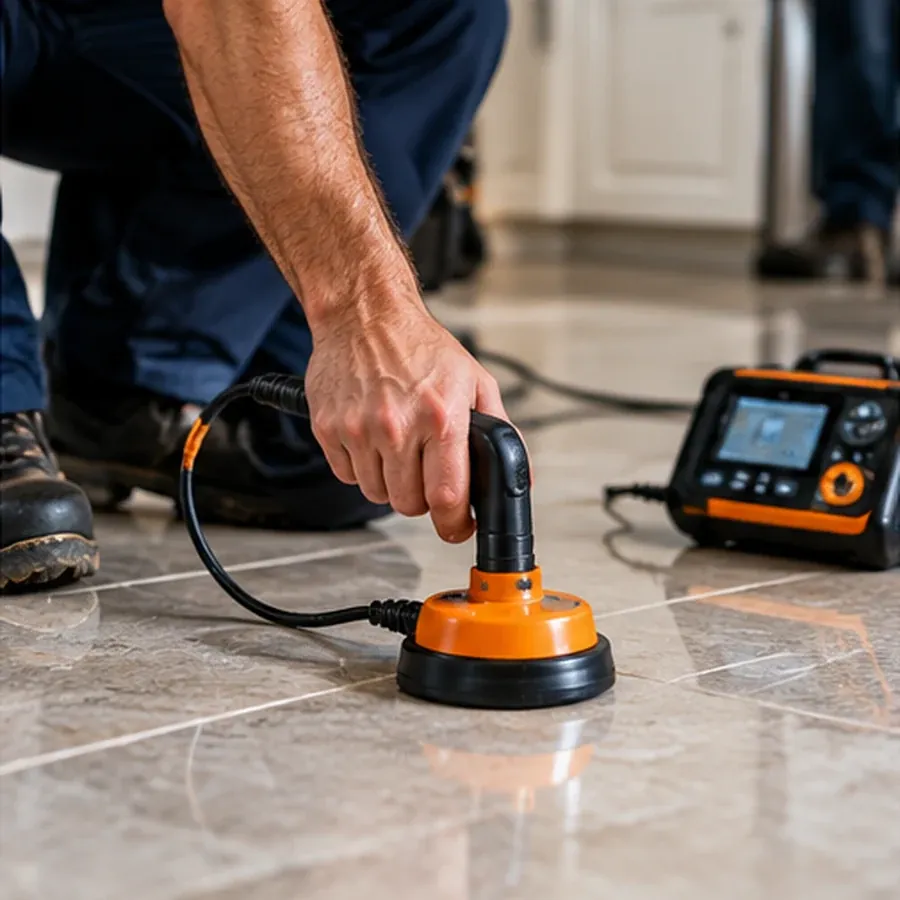
We start by listening to what you have noticed and reviewing the plumbing layout. We check fixtures and the water heater to rule out simpler explanations, then isolate sections of the system to see which line is losing pressure. Once the affected line is identified, we use detection equipment — including acoustic listening tools and electronic leak detectors — to narrow down the leak area from the surface.
The methods we use depend on your home: pipe material, hot or cold line, flooring type, and background noise all affect what works best. We will explain what we are doing and why as we go.
Honest about limitations. Detection accuracy depends on conditions such as pipe material, depth, flooring, and background noise. We will tell you how confident we are in our findings and what could affect them. Repair is a separate step — ask us what is included when you call.
Accurate detection gives you better information before any repair decision.
Knowing the likely leak location means a repair contractor can open the right area instead of exploring.
Detection is done from the surface first, so flooring and concrete stay intact while the leak is located.
Clear findings help you compare repair options and support conversations with your insurer.
A step-by-step approach from your first call to clear findings.
Tell us what you are noticing, where, and when it started.
We review the symptoms and check fixtures, the water heater, and the meter.
We isolate lines and use suitable equipment to narrow down the leak area.
We explain what we found, how confident we are, and your options.
Common questions about slab leak detection.
A slab leak is a leak in a water or drain line that runs in or beneath a home's concrete foundation. Because the line is hidden, you usually notice its effects — rising water use, warmth, dampness, or sound — rather than the leak itself.
We narrow it down from the surface. After confirming which line is losing water, we use equipment such as acoustic listening devices and electronic detectors to follow leak signals and identify where they are strongest. Accessing the pipe for repair is a separate step that comes after the leak is located.
Detection and repair are different services. Our focus is locating the leak and explaining what we find. Ask us about repairs and what is included when you call, so the scope is clear before any work is scheduled.
If water is actively damaging your home, shutting off the main valve can limit damage. If the signs are subtle, you can usually leave the water on so we can test the system. If you are unsure, call us and describe what you are seeing.
Recent water bills, notes on what you noticed and when, photos of any damp areas, and clear access to the water heater, main shutoff, and the areas where you noticed symptoms.
Usually not with certainty. Detection identifies where water is escaping; it cannot reliably date a leak. Your water bills and the timing of symptoms are often the best clues.
Related services that may be relevant to your situation.
Targeted investigation of pressurized water lines that run below the foundation, to narrow down the leak area before any access work.
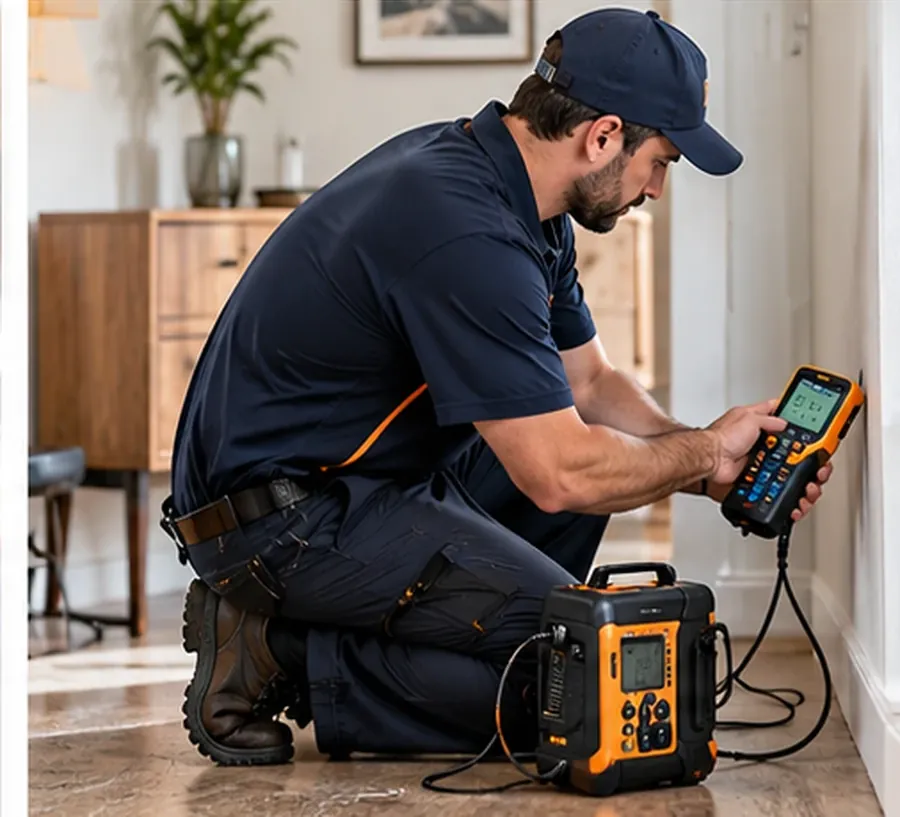
Electronic detection equipment that helps amplify and interpret leak signals that are hard to pick up without specialized tools.

Sensitive listening equipment used to follow the sound of water escaping a pressurized line and pinpoint where it is loudest.
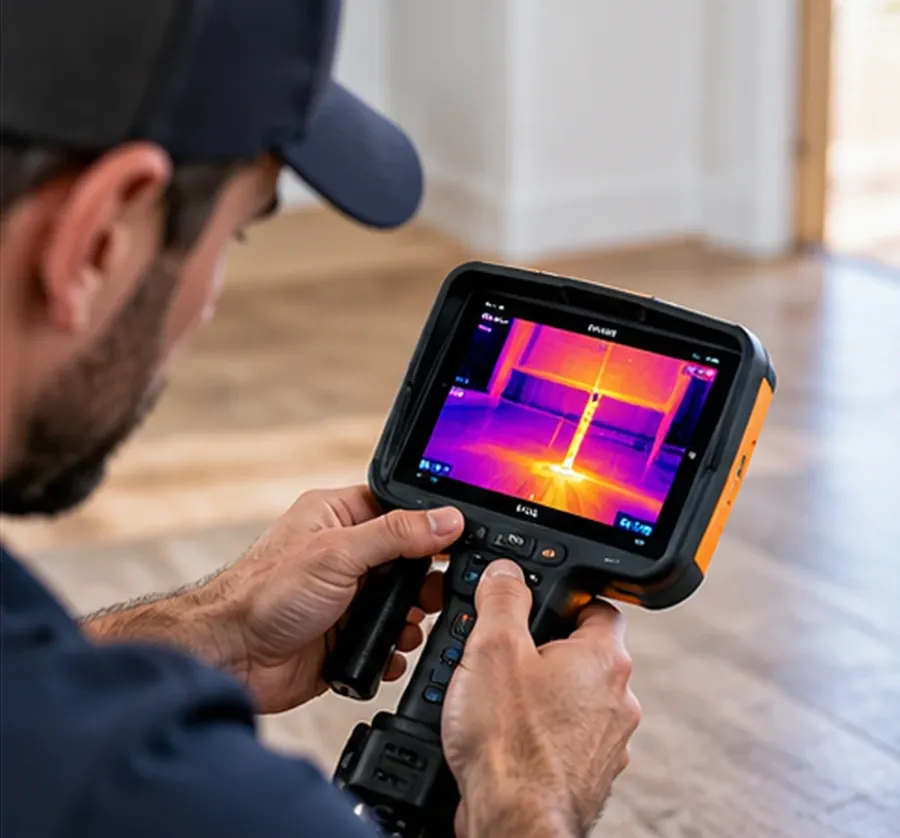
A structured assessment that brings the symptoms, plumbing layout, and test results together into clear findings and next steps.
Practical guides to help you understand what you are seeing and what comes next.
The ten symptoms most often linked to slab leaks, what each one can (and can't) tell you, and a simple way to decide when it's time for a professional assessment.
What actually happens during professional leak detection — the common methods, what each one can and cannot tell you, and why the approach varies from home to home.

What drives the price of finding a hidden leak, how detection costs differ from repair costs, and how to get an accurate quote for your property.
Tell us what you have noticed. We will talk through the symptoms, explain how an assessment works, and help you decide on the right next step.