

Slab Leak Detection
Investigate the signs of a possible leak beneath your concrete slab and find out where the problem is most likely located.
Hot and cold supply lines beneath a foundation are under constant pressure, so a leak there keeps running day and night. We focus on identifying which buried line is losing water and narrowing down where — before anyone opens a floor.
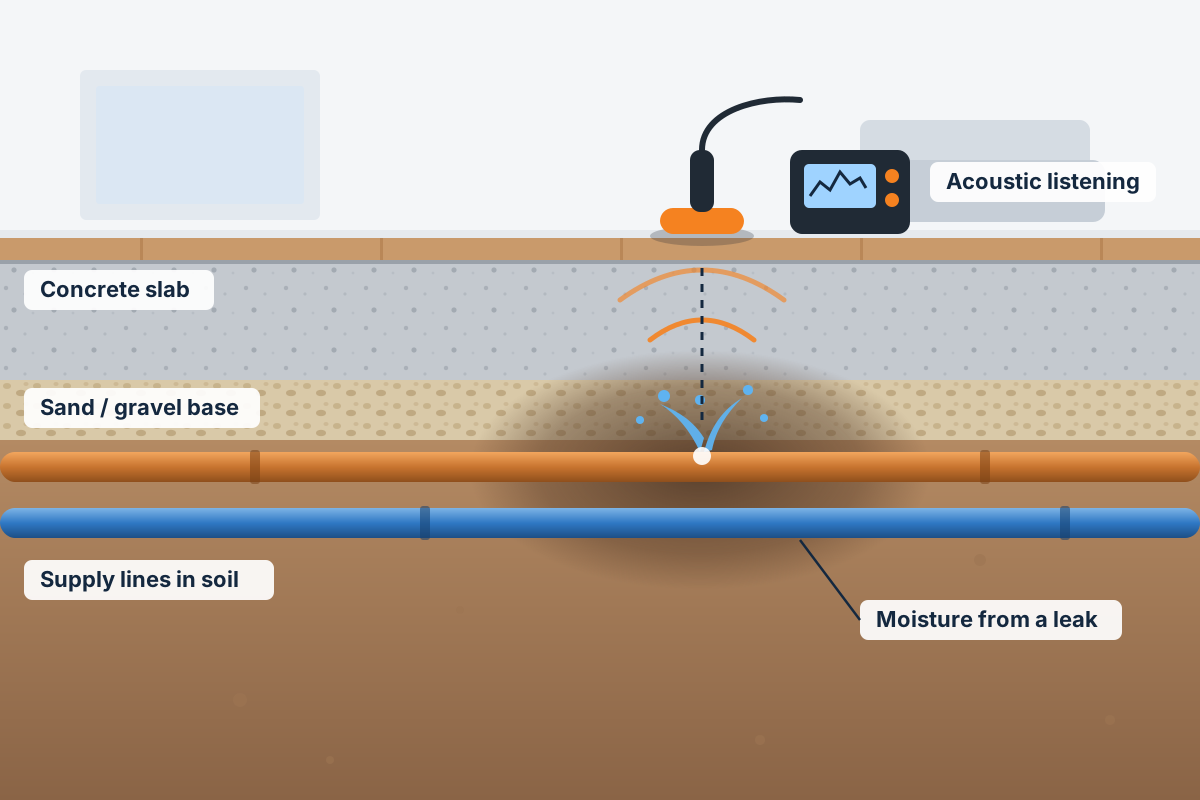
Supply-side leaks under the slab tend to produce a recognizable pattern. You may be dealing with one if you notice:
Symptoms that appear mainly after draining (showers, laundry) can point toward drain lines instead. Our guide on telling a slab leak from other plumbing leaks explains the difference.
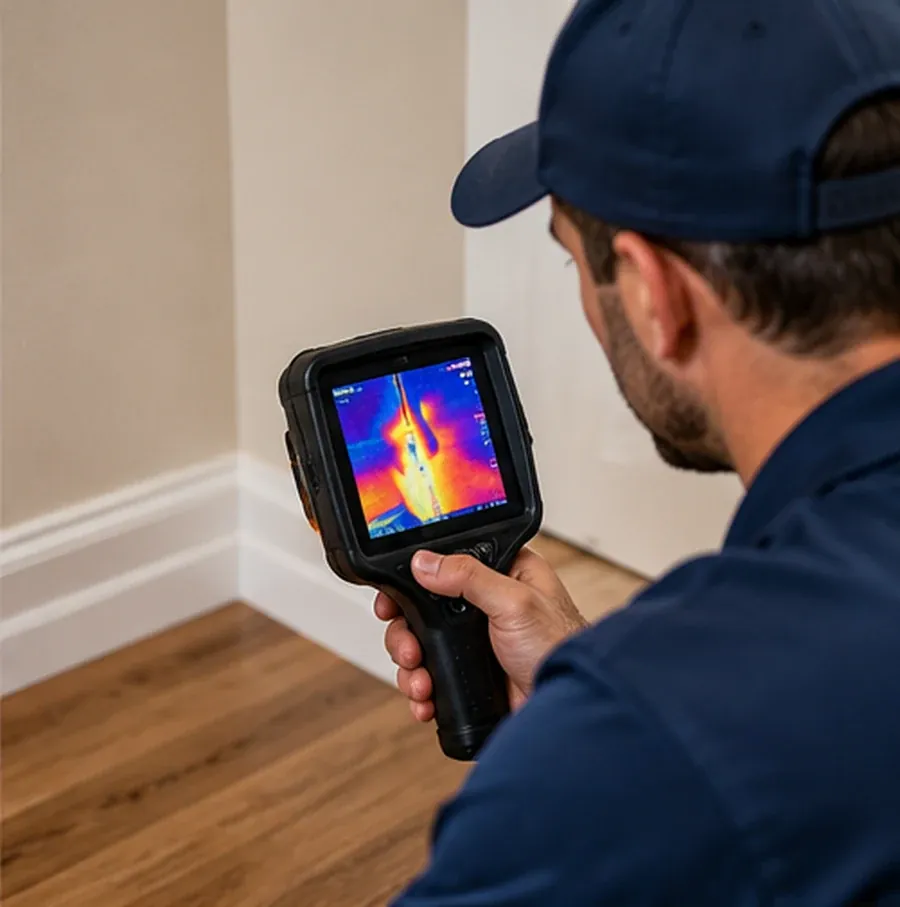
Under-slab detection is about moving from a general suspicion to a specific area. The process typically includes:
For a deeper look at why lines under a slab fail in the first place, read what causes slab leaks.
Honest about limitations. Some conditions make under-slab leaks harder to pinpoint — for example, plastic piping, deep lines, very small leaks, or noisy environments. If that is the case, we will explain what we found, what remains uncertain, and what options exist.
Accurate detection gives you better information before any repair decision.
Identifying the affected line helps you and your plumber choose between a spot repair and a reroute.
We mark the likely leak location so repair work can start in the right place.
Leaks under pressure run continuously. Locating them promptly limits waste and moisture.
A step-by-step approach from your first call to clear findings.
Tell us what you are noticing, where, and when it started.
We review the symptoms and check fixtures, the water heater, and the meter.
We isolate lines and use suitable equipment to narrow down the leak area.
We explain what we found, how confident we are, and your options.
Common questions about under-slab water leak detection.
They overlap. Under-slab water leak detection focuses specifically on pressurized supply lines running beneath the foundation, while slab leak detection is the broader service for any suspected leak in or under the slab. When you call, we will help you figure out which applies.
Supply lines are pressurized, so a leak on one usually makes the meter move even when nothing is running. Drain lines are not pressurized, so they generally do not show on the meter.
Often, yes. Isolating and testing the hot and cold sides separately is a standard way to identify the affected line. A warm area on the floor can also be a clue for hot-water leaks.
Not to locate the leak — that work is done from the surface. Accessing the pipe to repair it is a separate step, and the right repair approach depends on what is found.
If water is actively damaging your home, treat it as urgent and limit damage. If symptoms are subtle, it is still wise to act promptly, because a pressurized leak keeps running until it is repaired.
Related services that may be relevant to your situation.
Investigate the signs of a possible leak beneath your concrete slab and find out where the problem is most likely located.

Electronic detection equipment that helps amplify and interpret leak signals that are hard to pick up without specialized tools.

Sensitive listening equipment used to follow the sound of water escaping a pressurized line and pinpoint where it is loudest.
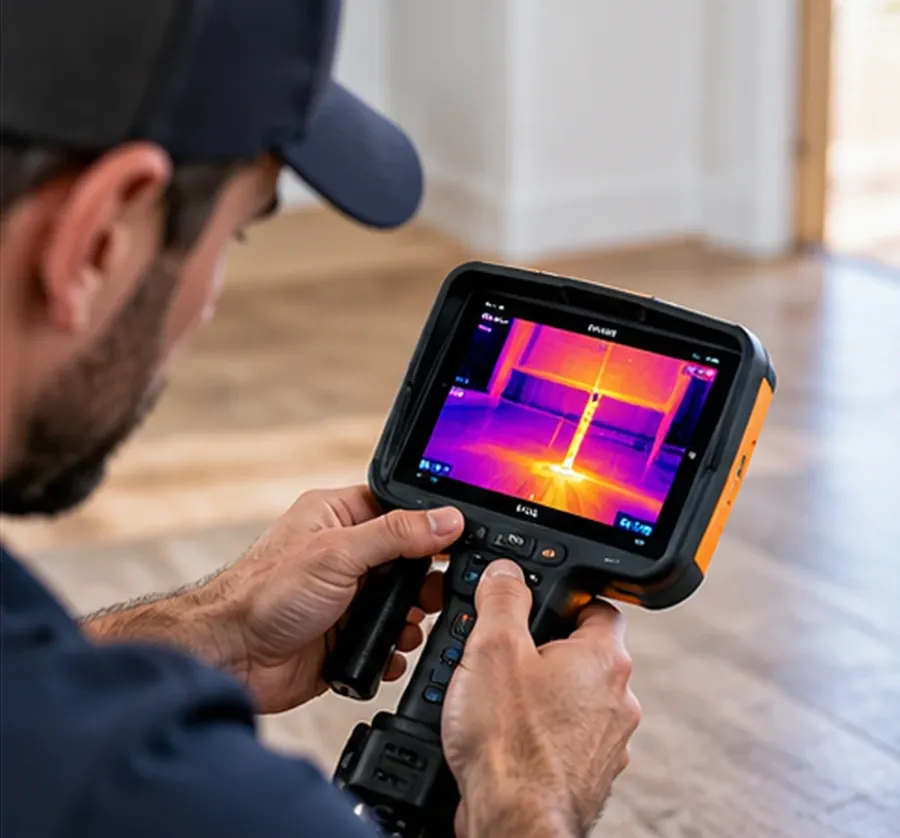
A structured assessment that brings the symptoms, plumbing layout, and test results together into clear findings and next steps.
Practical guides to help you understand what you are seeing and what comes next.
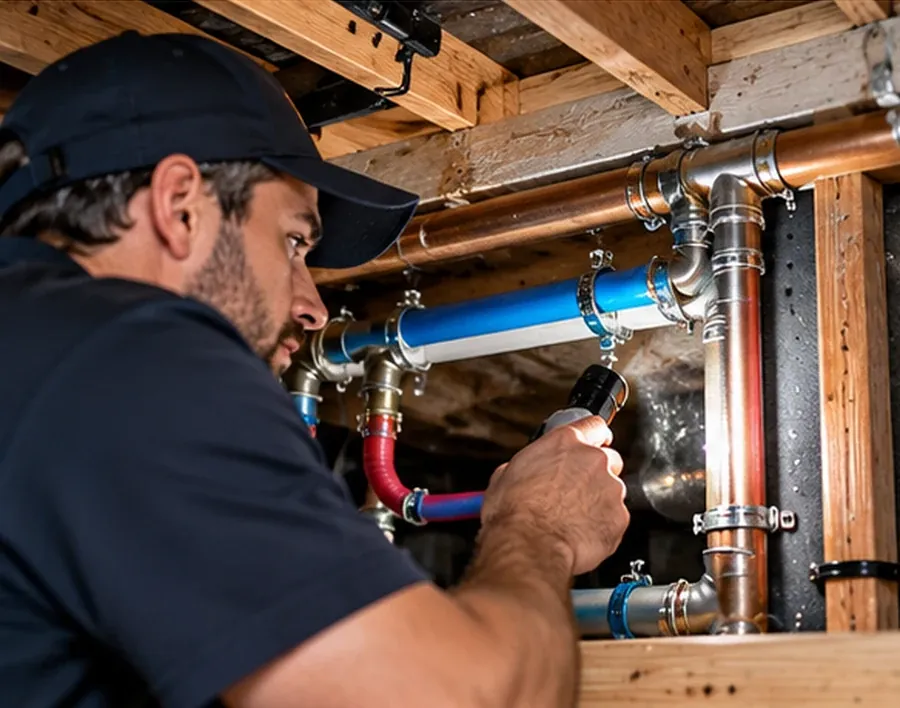
From corrosion and water chemistry to abrasion and soil movement — what is known about why lines under a slab fail, and what depends on your particular home.
A practical, step-by-step way to review your bills, read the meter, test toilets and fixtures, and decide whether a hidden leak is likely.
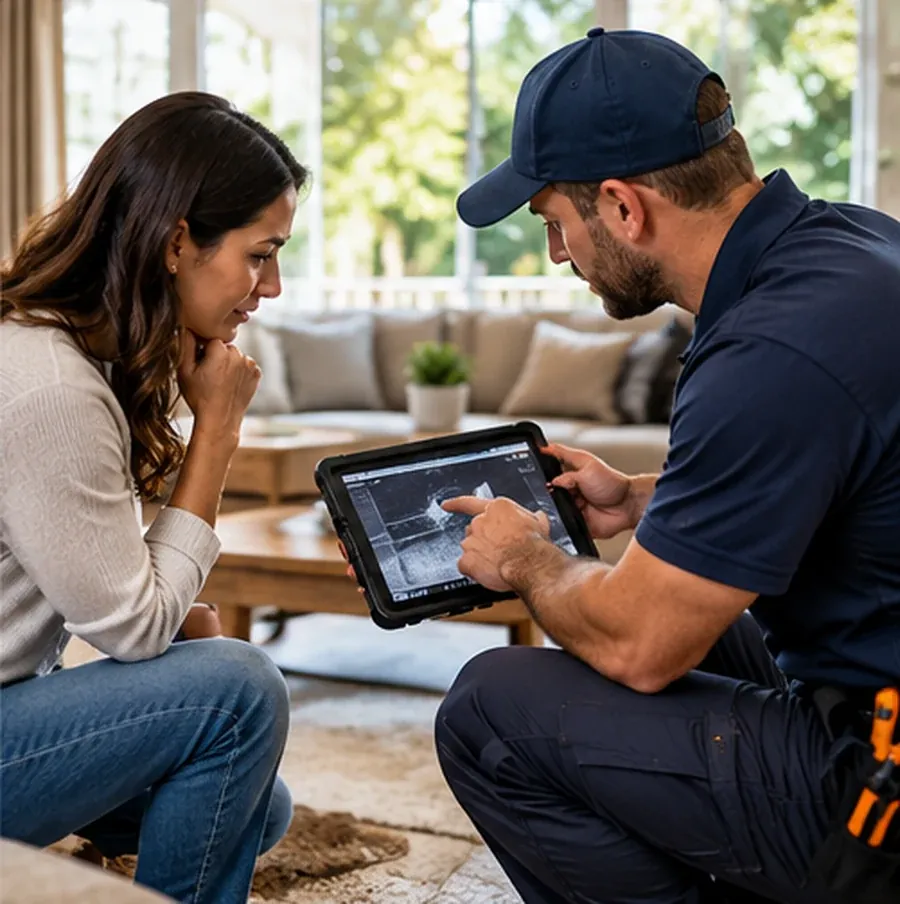
Detection tells you where. Repair decides what to do about it. Here is how the steps fit together and what to ask before you authorize any work.
Tell us what you have noticed. We will talk through the symptoms, explain how an assessment works, and help you decide on the right next step.