

Slab Leak Detection
Investigate the signs of a possible leak beneath your concrete slab and find out where the problem is most likely located.
Leak signals under a concrete floor are often faint and easy to confuse with household noise. Electronic leak detection equipment helps amplify, filter, and compare those signals, so the search can be guided by readings rather than guesswork.

Electronic equipment is especially useful when a hidden leak is suspected but the evidence is subtle:
Electronic detection is one tool among several. We choose methods based on your home and symptoms. Learn more in how professional slab leak detection works.
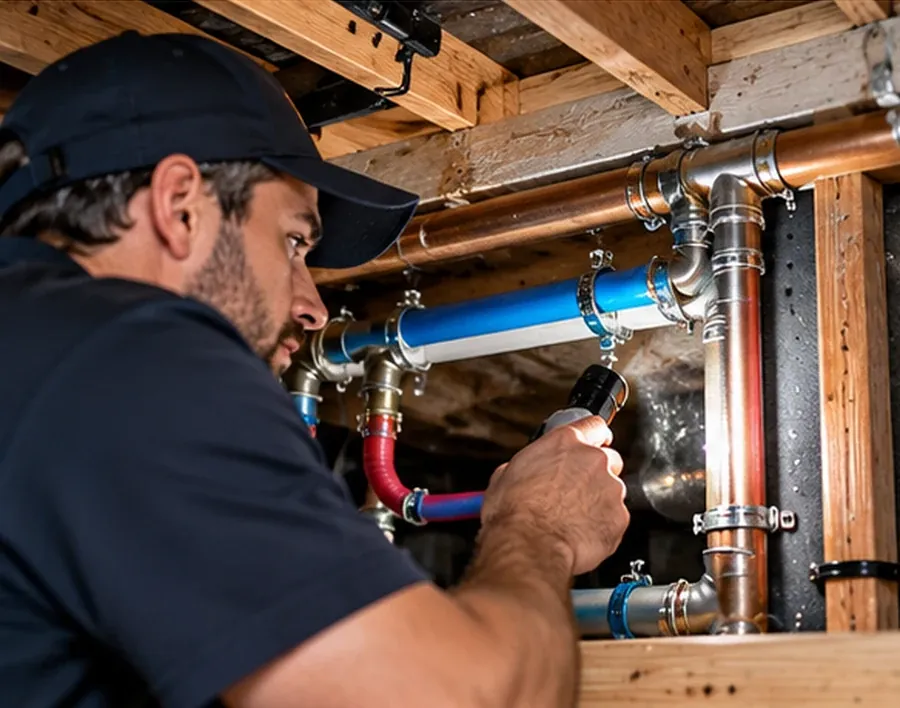
Water escaping a pressurized pipe creates vibration and sound. Electronic leak detectors use sensitive sensors and amplifiers to pick up those signals, and filters to help separate them from background noise such as appliances, HVAC, and traffic. Many units display signal strength, which makes it easier to compare readings at different points on the floor and identify where the signal peaks.
Electronic equipment can also support line tracing — mapping where a pipe actually runs beneath the floor — which matters because the shortest route between two fixtures is rarely the one the installer took.
Electronic detection works hand in hand with acoustic listening and the broader diagnostic assessment. Using more than one approach helps confirm findings.
Honest about limitations. Electronic detection is sensitive to conditions. Pipe material, depth, flooring, and background noise all affect signal quality, and plastic piping can be more challenging. We will explain any limitations that apply to your home.
Accurate detection gives you better information before any repair decision.
Signal strength readings help compare locations objectively.
Filtering helps separate leak signals from everyday household sounds.
Line tracing helps confirm where the affected pipe actually runs.
A step-by-step approach from your first call to clear findings.
Tell us what you are noticing, where, and when it started.
We review the symptoms and check fixtures, the water heater, and the meter.
We isolate lines and use suitable equipment to narrow down the leak area.
We explain what we found, how confident we are, and your options.
Common questions about electronic leak detection.
Yes. The equipment works from the surface and does not require opening floors or walls. Some steps may involve briefly shutting off water while lines are isolated.
They are closely related. Acoustic detection focuses on listening to leak sounds; electronic detection uses electronic sensors, amplification, filtering, and readouts to help interpret those signals. In practice they are often used together.
It can be more challenging, because plastic pipe absorbs leak vibrations more than metal pipe. Other methods may be needed to cross-check results. We will tell you if your piping affects the approach.
Drain lines are not under constant pressure, so they do not produce the same continuous signals. Drain leaks are usually investigated with different methods. Tell us which symptoms you are seeing and we will advise.
It helps narrow down the most likely leak area. Accuracy depends on conditions, and we will explain how confident we are in the location we mark.
Related services that may be relevant to your situation.
Investigate the signs of a possible leak beneath your concrete slab and find out where the problem is most likely located.
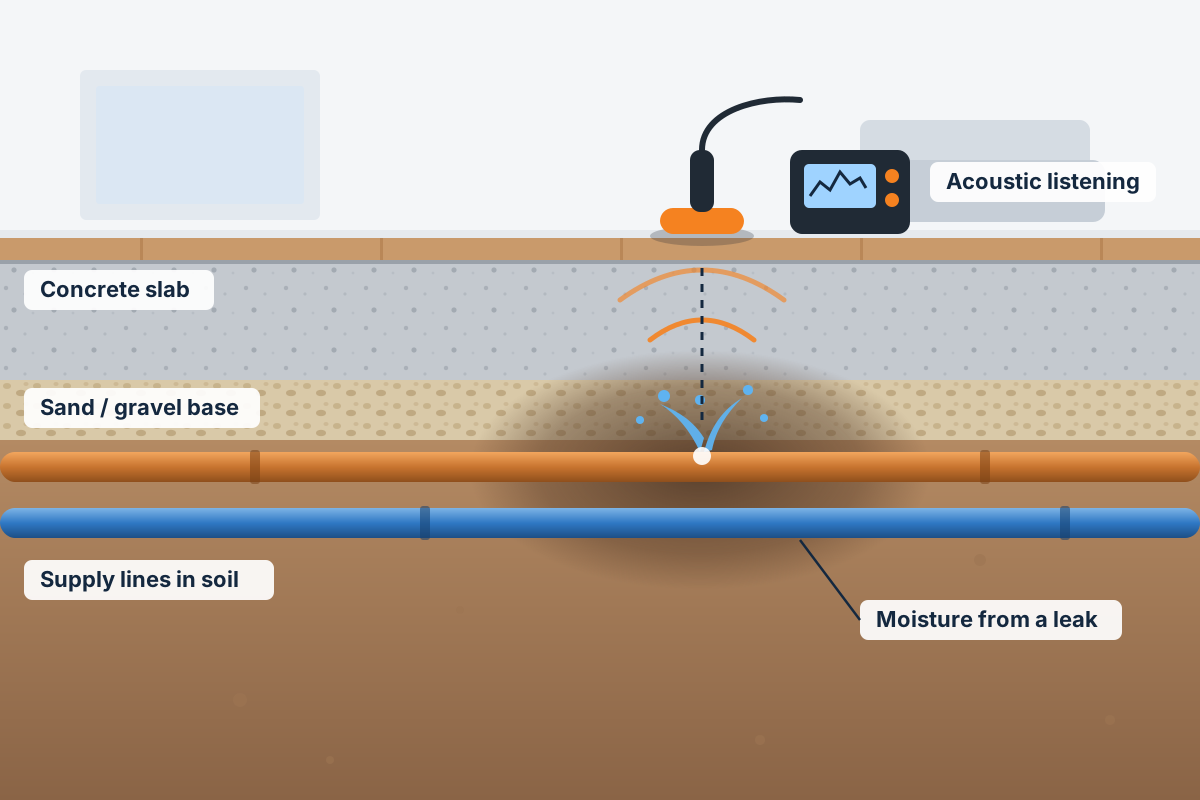
Targeted investigation of pressurized water lines that run below the foundation, to narrow down the leak area before any access work.

Sensitive listening equipment used to follow the sound of water escaping a pressurized line and pinpoint where it is loudest.
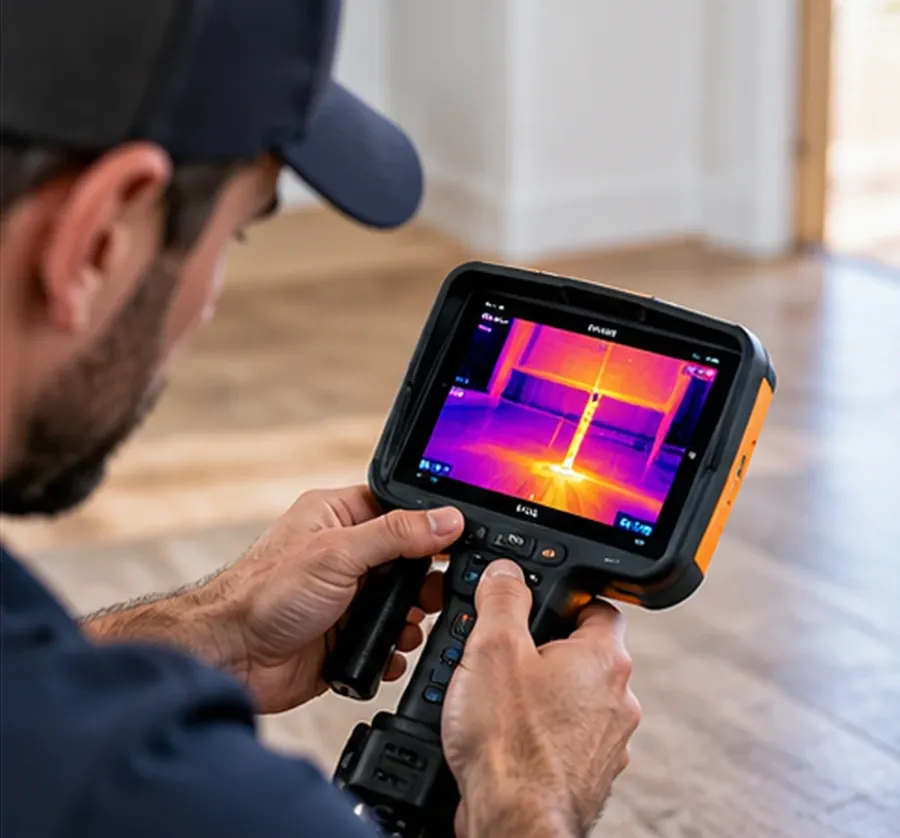
A structured assessment that brings the symptoms, plumbing layout, and test results together into clear findings and next steps.
Practical guides to help you understand what you are seeing and what comes next.
What actually happens during professional leak detection — the common methods, what each one can and cannot tell you, and why the approach varies from home to home.
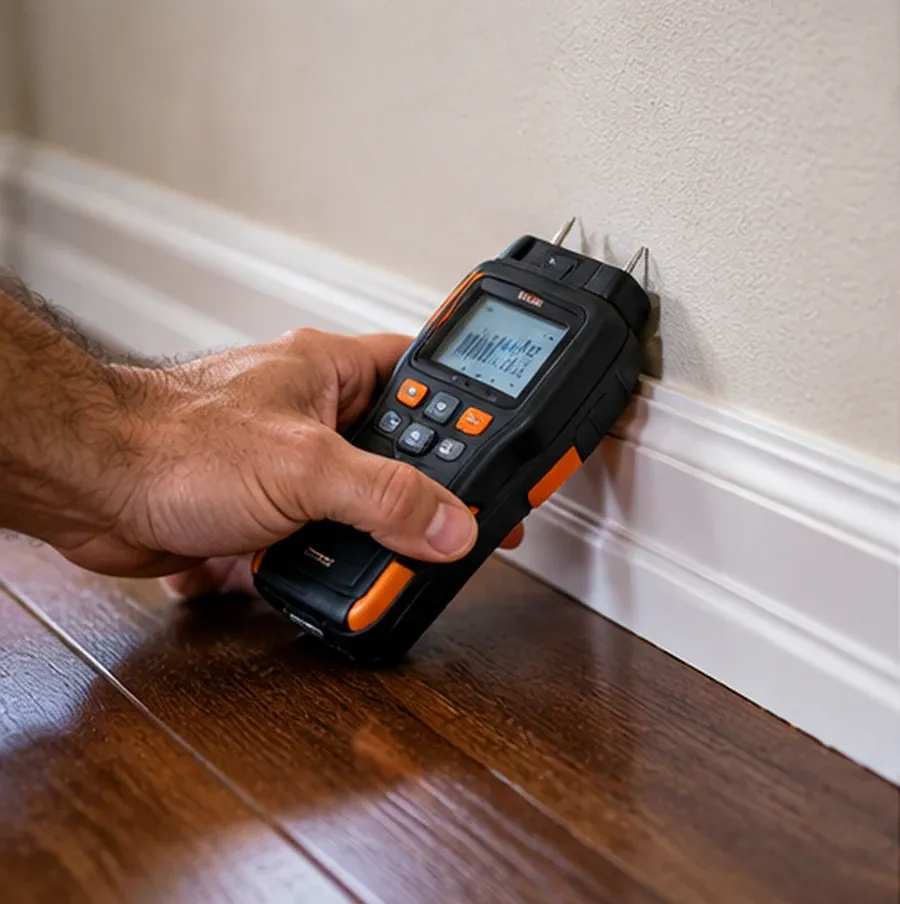
Fixture, supply-line, drain, and slab leaks can look alike. Here is how their symptoms differ, why they overlap, and which checks help you narrow things down.
A walk-through of a typical slab leak inspection, what you will be asked, how to prepare your home, and what you should have in hand when it is done.
Tell us what you have noticed. We will talk through the symptoms, explain how an assessment works, and help you decide on the right next step.