

Slab Leak Detection
Investigate the signs of a possible leak beneath your concrete slab and find out where the problem is most likely located.
Sometimes the hardest part of a hidden leak is making sense of the clues. Our diagnostic assessment brings together your symptoms, the plumbing layout, and test results to determine what is happening and where — and explains it in plain language.
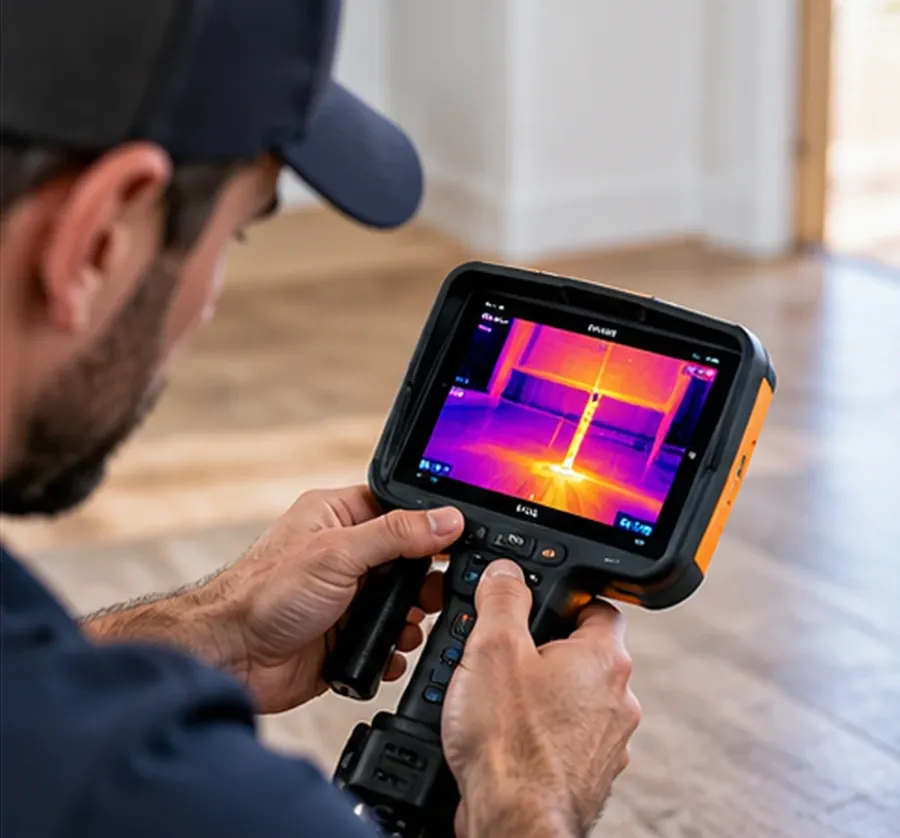
A diagnostic assessment is a good starting point when the situation is unclear:
If you are not sure whether you need a slab leak specialist at all, start with our guide to checking for unexplained water usage.
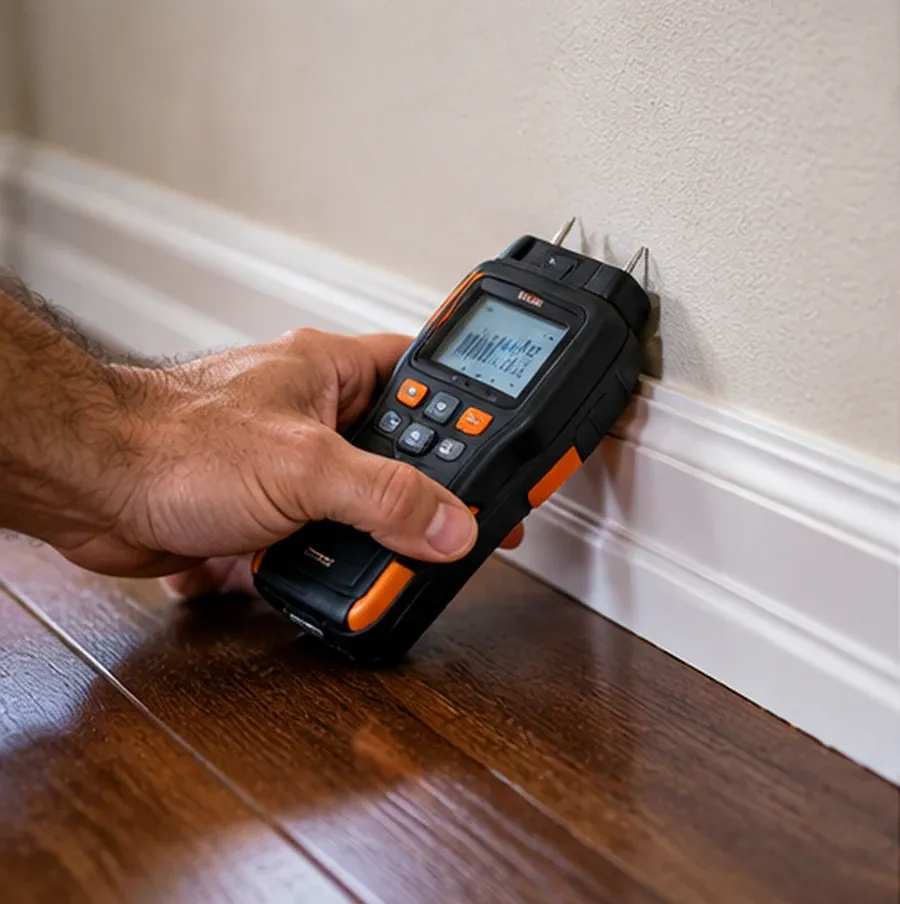
This is our most structured service. Rather than starting with a single tool, it works through the problem step by step:
Moisture readings and thermal images are useful supporting evidence, but neither proves a leak on its own. Thermal camera maker Teledyne FLIR notes that a pattern that looks like moisture does not guarantee water is present, which is why we cross-check results.
Honest about limitations. A diagnostic assessment gives you the best available picture based on the evidence, but some situations — very small or intermittent leaks, for instance — can remain uncertain. If so, we will explain what we found and what further testing could help.
Accurate detection gives you better information before any repair decision.
Useful for repair contractors, property owners, and conversations with your insurer.
Knowing what is not the problem is as valuable as knowing what is.
We explain the evidence and our confidence level — no jargon.
A step-by-step approach from your first call to clear findings.
Tell us what you are noticing, where, and when it started.
We review the symptoms and check fixtures, the water heater, and the meter.
We isolate lines and use suitable equipment to narrow down the leak area.
We explain what we found, how confident we are, and your options.
Common questions about leak location & diagnostic assessment.
Slab leak detection focuses on locating a suspected leak beneath the slab. A diagnostic assessment takes a broader view when the cause is unclear, working through symptoms and test results to determine what is happening — which may or may not be a slab leak.
Ask us when you call about the format of findings for your visit. Written notes are useful for repair contractors, property owners, and insurers.
Thermal imaging can be a helpful supporting tool, particularly for hot-water lines, when conditions suit it. It does not detect water directly, so we treat it as one piece of evidence alongside other methods. Ask us which methods suit your situation.
We work with homeowners, property managers, and commercial property owners. Call to describe the property and the concern so we can confirm scope and scheduling.
That is useful information. We will explain what was ruled out and where the evidence points instead — for example, a fixture, an irrigation line, or a drain — so you know who to call next.
Related services that may be relevant to your situation.
Investigate the signs of a possible leak beneath your concrete slab and find out where the problem is most likely located.
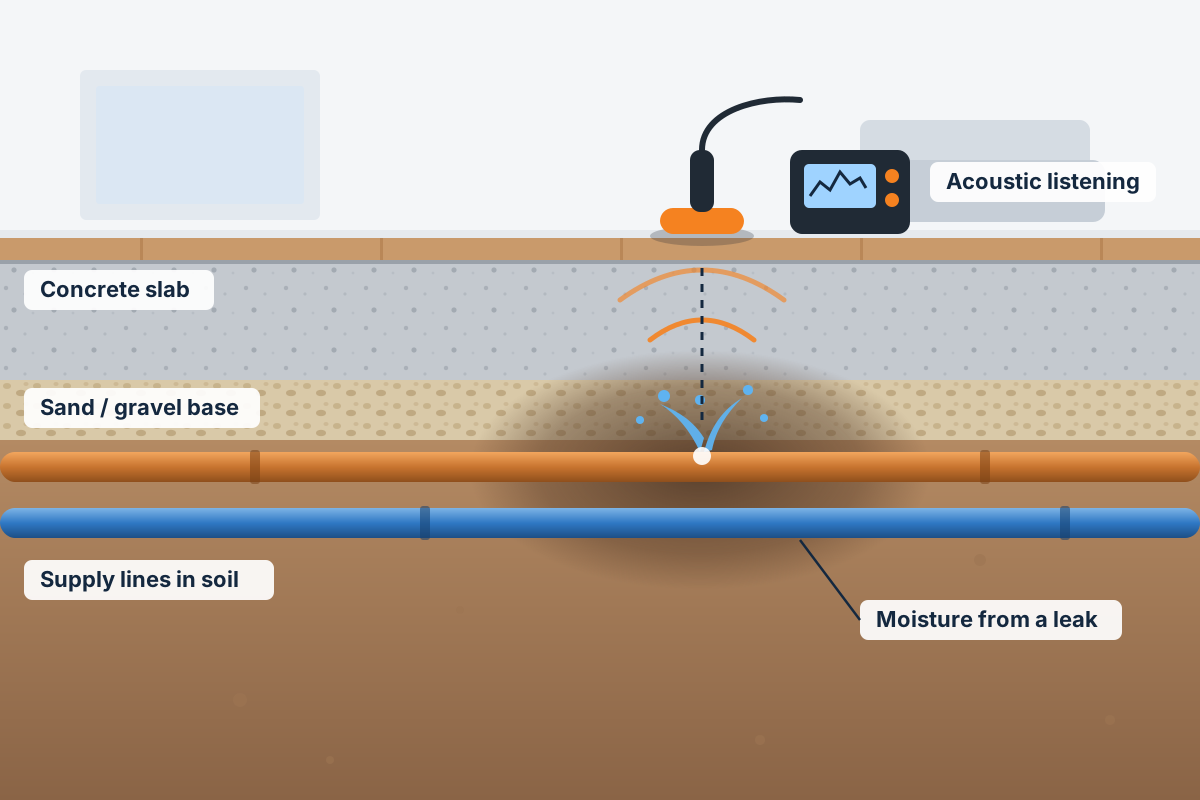
Targeted investigation of pressurized water lines that run below the foundation, to narrow down the leak area before any access work.

Electronic detection equipment that helps amplify and interpret leak signals that are hard to pick up without specialized tools.

Sensitive listening equipment used to follow the sound of water escaping a pressurized line and pinpoint where it is loudest.
Practical guides to help you understand what you are seeing and what comes next.
Fixture, supply-line, drain, and slab leaks can look alike. Here is how their symptoms differ, why they overlap, and which checks help you narrow things down.
What a persistent under-slab leak can do to flooring, indoor moisture, and the soil below — explained carefully, without overstating the risks.

There is no universal yes or no. Here are the distinctions insurers commonly draw — and how to document a suspected slab leak for a claim.
Tell us what you have noticed. We will talk through the symptoms, explain how an assessment works, and help you decide on the right next step.