Key takeaways
- An inspection moves from conversation, to system checks, to locating, to explaining findings.
- Clearing access and gathering your bills and notes makes the visit faster and more focused.
- You should leave with a clear explanation of what was found and what your options are.
If you have scheduled — or are thinking about scheduling — a slab leak inspection, it helps to know what will happen. Knowing the process makes it easier to prepare your home, ask good questions, and get the most value from the visit.
Before the visit: the first conversation
It starts with a phone call. Expect questions such as:
- What have you noticed, and where in the house?
- When did it start, and is it getting worse?
- Has your water bill changed? Have you checked the meter?
- How old is the home, and has the plumbing been repaired or replaced?
- Where are the water heater and main shutoff valve?
This is also the time to ask about scope, cost, timing, and whether repairs are a separate service. See what affects slab leak detection cost for questions worth asking.
How to prepare your home
- Clear access to the water heater, main shutoff, and the water meter box.
- Move small furniture, rugs, and stored items away from areas where you noticed symptoms.
- Have your last few water bills handy (paper or online).
- Write down your observations and gather any photos.
- Secure pets and let the technician know about any access instructions.
- Avoid running appliances that use water during the visit unless asked.
During the inspection
1. Walk-through and symptom review
The technician will typically walk through the home with you, look at the areas you are concerned about, and confirm details such as fixture locations and where lines are likely to run.
2. Checking the system
Fixtures, the water heater, and visible plumbing are checked, and the water meter may be observed. As utility guidance notes, the meter's low-flow indicator can register even small leaks, which helps confirm whether water is escaping.
3. Isolating and testing lines
If a hidden supply leak is suspected, sections of plumbing may be isolated and pressure tested to identify which line is affected. A basic version of this test is described in EPA WaterSense guidance: shut off the main valve and see whether pressure holds steady over several minutes. Water may be off for short periods during this step.
4. Locating the leak
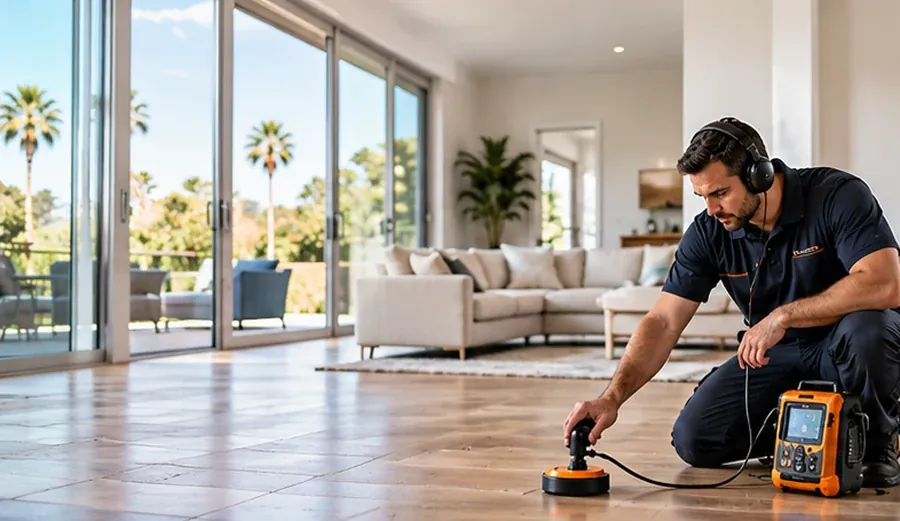
Using tools suited to the situation — for example, acoustic listening equipment or electronic detection — the technician works to narrow down where along the line water is escaping. This part takes patience; background noise may need to be minimized.
5. Marking and explaining findings
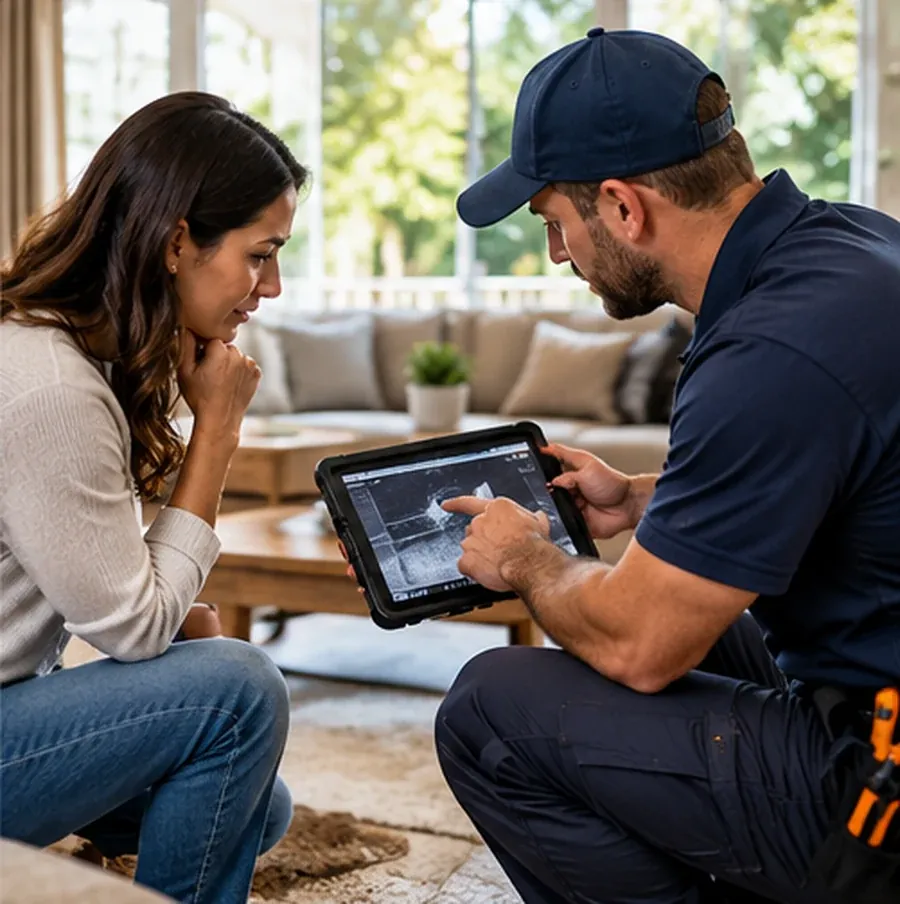
The likely leak area is often marked on the floor. You should get a clear explanation of which line is leaking, how the location was determined, and how confident the technician is.
After the inspection
You should come away with:
- A summary of what was tested and what was ruled out
- The affected line and the likely leak location
- Any limitations or uncertainty in the findings
- Reasonable next steps, which may include repair options from a licensed plumber
Remember that locating a leak and repairing it are different jobs. Read slab leak detection vs. repair to understand your options, and how professional slab leak detection works for more about the methods.
The bottom line
A slab leak inspection is a structured, step-by-step investigation. A little preparation on your part — clear access, your bills, and good notes — helps the technician work efficiently and gives you clearer answers. Ready to talk it through? Contact Precision Slab Leak Detection.
Concerned about a possible slab leak in Whittier? Call Precision Slab Leak Detection at (562) 358-3136 to talk through what you are noticing and how an assessment would work for your property.
Frequently Asked Questions
It is usually best for an adult who can answer questions about the property to be present, at least at the start and when findings are explained. Ask about this when you schedule.
Possibly, for short periods. Isolating lines and running pressure tests can require temporarily shutting off water. Your technician should let you know before doing so.
Detection work is generally done from the surface and is designed to be non-invasive. Some furniture may need to be moved for access, and a technician may mark the suspected leak area with tape or a marker that can be removed.
Sometimes conditions make a leak hard to pin down — for example, very small leaks or plastic lines. A good technician will explain what was ruled out, what remains possible, and what options exist for further testing.
Sources
- City of Hayward, California. How to Read Your Water Meter.
- U.S. Environmental Protection Agency. Free of Leaks — Technical Reference Manual for WaterSense Labeled Homes (EPA-832-F-23-016, July 2023).
This article is general educational information, not a diagnosis of any specific property or professional plumbing, legal, insurance, or health advice. Conditions vary; consult qualified professionals for your situation.