Key takeaways
- Most slab leak signs are indirect: higher water use, warmth, dampness, sound, or pressure changes.
- No single sign proves a slab leak. Several signs together — especially with a moving water meter — make a hidden leak more likely.
- You can safely check fixtures and your water meter yourself. Locating a leak under concrete calls for professional equipment.
A slab leak is a leak in a water or drain line that runs in or beneath a home's concrete foundation. Because the pipe is hidden under concrete and flooring, you rarely see the leak itself. Instead, you notice what it does: the bill creeps up, a floor feels warm, a baseboard stays damp, or you hear water moving when nothing is running.
The signs below are the ones homeowners most often report. Each one has other possible explanations, so treat them as reasons to look closer — not as a diagnosis.
The 10 most common slab leak warning signs
1. An unexplained jump in your water bill
A higher bill with no change in household habits is often the first clue. Hidden leaks can waste a surprising amount of water: the U.S. EPA's WaterSense program estimates that the average household's leaks can account for more than 9,300 gallons of water wasted every year. Compare your last few bills against the same months last year so you are not misled by seasonal changes like summer irrigation.
2. A water meter that moves when everything is off
This is one of the most useful checks you can do yourself. Turn off every fixture and water-using appliance, then watch the meter. Many meters have a small low-flow indicator that turns with very little flow; as the City of Hayward explains, movement while your water is off suggests a leak somewhere on the property. That "somewhere" could be a toilet, irrigation line, or the service line outside — so a moving meter tells you that water is escaping, not where. Our step-by-step meter guide walks through the test.
3. Warm or hot spots on the floor
A leak on a hot-water line can warm the slab above it. You may notice a patch of tile that feels warm under bare feet, or a pet that suddenly prefers one spot. Rule out radiant heating, ducts, and appliances first; a new warm area with no obvious source deserves attention.
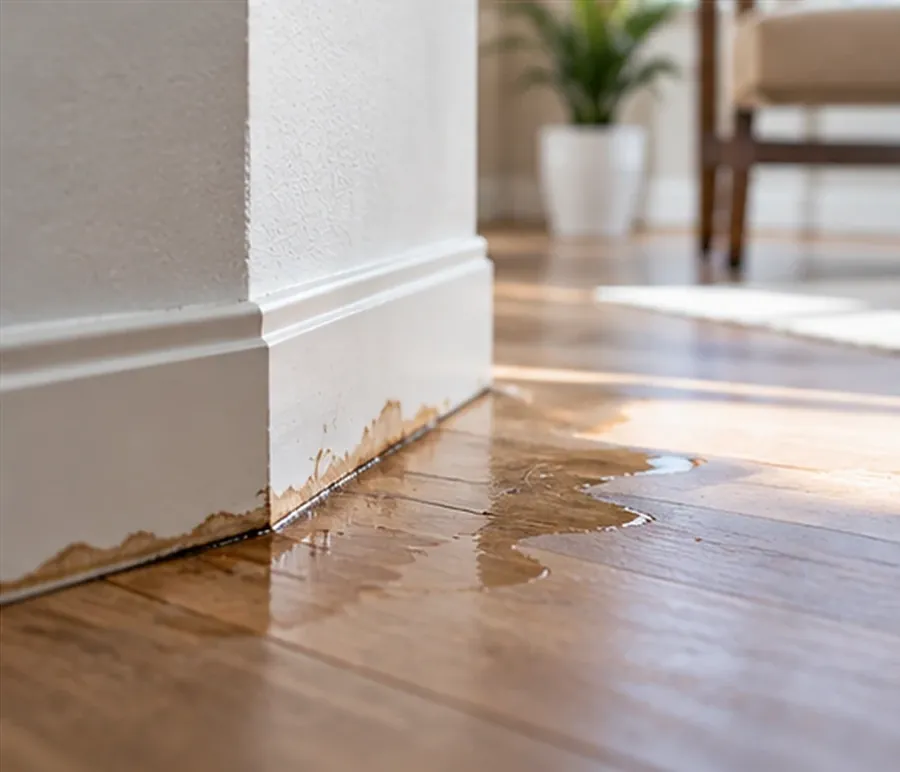
4. Damp, discolored, or cupped flooring
Moisture rising through the slab can stain carpet, loosen tile, or make wood flooring cup and swell. Look especially at edges, corners, and areas near kitchens, bathrooms, and laundry rooms where supply lines are concentrated.
5. Persistent moisture or musty odors
A musty smell or a baseboard that never quite dries can indicate water is reaching materials from below. The EPA notes that water-damaged materials should be dried within 24–48 hours to prevent mold growth — something that is hard to do when the source is hidden.
6. The sound of running water when fixtures are off
In a quiet house, water escaping a pressurized line can sometimes be heard as a faint hiss or rush in a wall or near the floor. Before assuming the worst, check that toilets are not refilling, the irrigation system is off, and no appliance is cycling.
7. Reduced water pressure
A significant leak can reduce pressure at fixtures, particularly if several fixtures feel weak at once. Pressure changes have many causes — regulator issues, utility work, clogged aerators — so this sign matters most alongside others.
8. A water heater that runs constantly
If a hot-water line is leaking, the water heater may cycle more often than usual because it keeps replacing lost hot water. Higher gas or electric use without explanation can be a supporting clue.
9. Water where it shouldn't be outside
Soggy soil next to the foundation, water seeping from the base of an exterior wall, or a patch of unusually green grass in dry weather can point to escaping water. Rule out irrigation overspray and drainage first.
10. New cracks combined with other symptoms
Cracks in flooring or the slab get a lot of attention, but they are a weak sign on their own. Concrete commonly develops shrinkage cracks as it cures; the Foundation Performance Association lists slab shrinkage cracks among the problems often mistakenly blamed on foundation movement. A crack is more meaningful when it appears together with moisture, warmth, or rising water use.
Why one sign is not proof
Almost every symptom above can be caused by something other than a slab leak: a running toilet, a dripping irrigation valve, condensation, a leaking water heater, a roof or window leak, or poor exterior drainage. EPA guidance lists common household leak sources such as worn toilet flappers, dripping faucets, and leaking irrigation components — all far easier to fix than a line under the slab.
That is exactly why a sensible approach starts with simple checks and moves to professional detection only when the evidence points beneath the floor. For a closer look at how to separate these possibilities, see how to tell a slab leak from other plumbing leaks.
What you can safely check yourself
- Toilets: Add a few drops of food coloring to each tank and wait; color in the bowl means the flapper is leaking.
- Visible fixtures and connections: Look under sinks, behind the washer, and around the water heater for drips.
- Irrigation: Make sure the controller is off and look for wet areas near valves.
- Water meter: With everything off, note the reading and check the low-flow indicator; repeat after a period of no use.
- Notes and photos: Record where you see moisture, warmth, or sound, and when it started.
Safety first. Do not open walls, cut into flooring, or break concrete to look for a leak. If water is near electrical outlets or equipment, keep clear and shut off power to that area only if you can do so safely.
When to call for a professional assessment
Use this simple rule of thumb:
| What you are seeing | Suggested next step |
|---|---|
| One mild sign, meter does not move with water off | Keep monitoring, recheck the meter in a week, and look for fixture leaks. |
| Meter moves with all fixtures off, no visible leak found | Schedule a leak detection assessment. |
| Two or more signs together (for example, warm floor plus higher bill) | Schedule a leak detection assessment soon. |
| Water actively damaging floors or belongings | Limit the damage, consider shutting off the main valve, and call for help right away. |
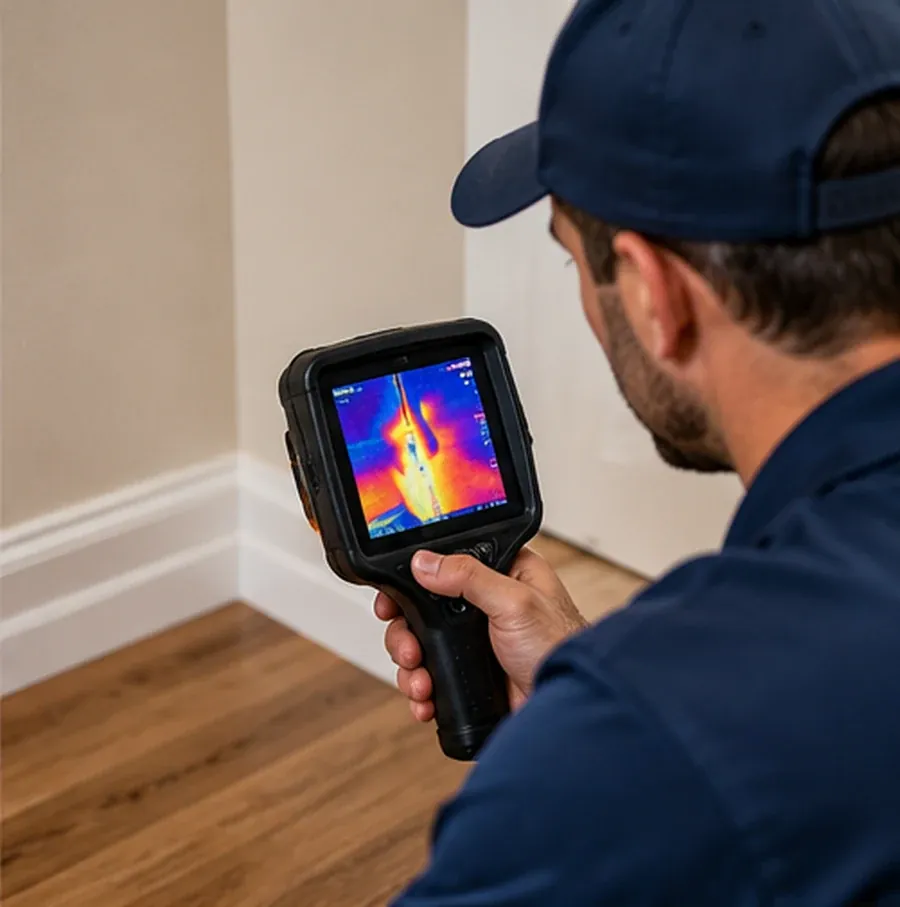
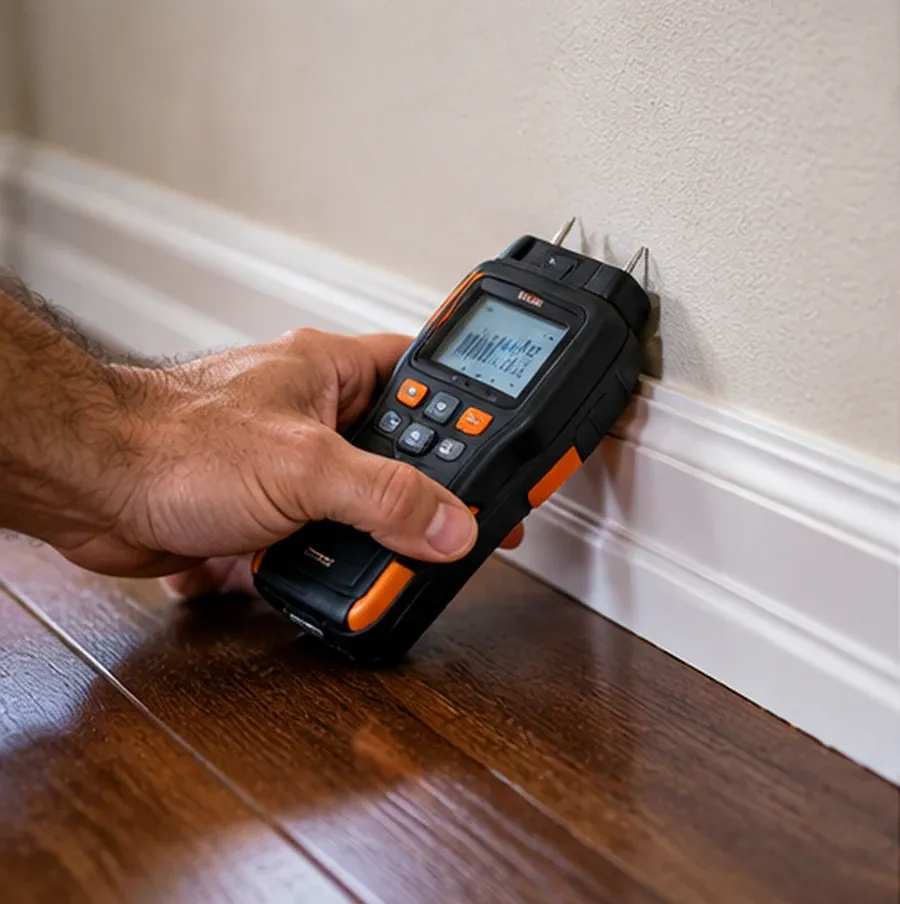
A professional slab leak detection assessment uses equipment such as acoustic listening devices and electronic detectors to narrow down where water is escaping, so any repair can be targeted instead of guesswork. If you want to know what that visit looks like, read what to expect during a slab leak inspection.
The bottom line
Slab leaks rarely announce themselves. They show up as patterns: a bill that keeps climbing, a floor that feels different, moisture that keeps coming back. Simple checks can rule out the easy explanations. When the evidence keeps pointing under the floor, a focused assessment helps you understand what is happening before you commit to repairs.
Concerned about a possible slab leak in Whittier? Call Precision Slab Leak Detection at (562) 358-3136 to talk through what you are noticing and how an assessment would work for your property.
Frequently Asked Questions
Yes. Water escaping from a line under the slab often soaks into the soil below and never reaches the surface, or only shows up much later. That is why unexplained water use, meter movement, or the sound of running water can be the first clues.
No. Radiant heating, ductwork, appliances, and sunlight can all warm a floor. A warm area is worth investigating when it is new, persistent, and has no obvious cause — especially if it follows the route of hot-water plumbing.
Not on its own. Concrete commonly develops shrinkage cracks as it cures, and many cracks have nothing to do with plumbing. A crack becomes more meaningful when it appears alongside moisture, rising water use, or other symptoms on this list.
If water is actively damaging floors or belongings, act right away to limit damage and call for help. If the signs are subtle, run a simple meter check and keep notes, then arrange a professional assessment rather than letting a possible leak run for weeks.
Describe what you noticed, where, and when it started; whether your water bill or meter readings have changed; the approximate age of the home; and any recent plumbing work. Photos of damp areas and recent bills are useful too.
Sources
- U.S. Environmental Protection Agency, WaterSense program. Fix a Leak Week.
- U.S. Environmental Protection Agency. Free of Leaks — Technical Reference Manual for WaterSense Labeled Homes (EPA-832-F-23-016, July 2023).
- U.S. Environmental Protection Agency. A Brief Guide to Mold, Moisture, and Your Home.
- City of Hayward, California. How to Read Your Water Meter.
- Foundation Performance Association. Distress Phenomena Often Mistakenly Attributed to Foundation Movement (FPA-SC-03-1).
This article is general educational information, not a diagnosis of any specific property or professional plumbing, legal, insurance, or health advice. Conditions vary; consult qualified professionals for your situation.