Key takeaways
- The most common consequences of a slab leak are flooring damage and excess moisture.
- Persistent leaks can create conditions for mold and can change soil moisture beneath the slab.
- Not every slab leak causes foundation damage, and not every crack points to a plumbing leak.
Homeowners often hear that a slab leak will "destroy your foundation." The reality is more nuanced. A leak that runs for a long time can certainly cause problems, but the type and severity depend on how much water is escaping, for how long, and the conditions beneath your particular home. Here is what is reasonable to expect — and what is not.
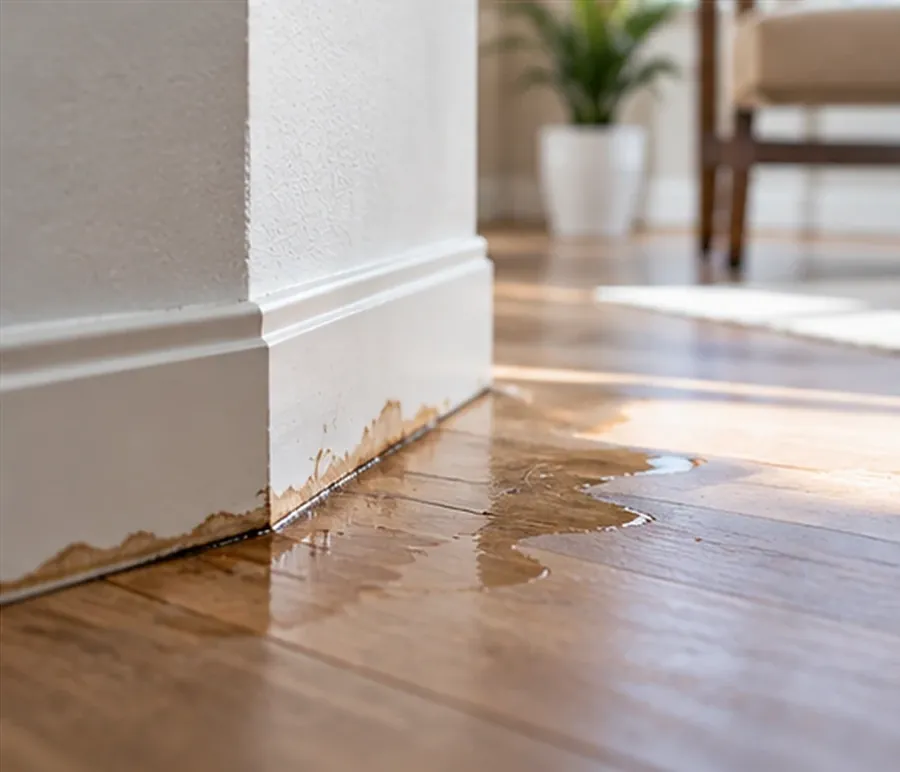
Flooring damage: the most common consequence
Water escaping beneath a slab often moves upward through the concrete over time. Different floor coverings react differently:
- Hardwood and engineered wood: can cup, crown, or swell as boards absorb moisture from below.
- Laminate: can swell at the seams and lose its bond.
- Carpet and padding: can become damp, stained, or musty, sometimes without obvious surface water.
- Tile: may loosen, and grout lines may darken or stay damp.
- Vinyl: can lift, bubble, or wrinkle.
These symptoms do not prove a slab leak — the Foundation Performance Association notes that wrinkled vinyl and buckled wood flooring often point to moisture or installation problems rather than foundation movement. But when flooring problems show up with other warning signs, a hidden leak is worth investigating.
Moisture accumulation and mold conditions
A continuous source of water beneath or within a slab can keep flooring, baseboards, and the lower parts of walls damp. That matters because, as the U.S. EPA puts it, "the key to mold control is moisture control." The EPA advises drying water-damaged areas and items within 24–48 hours to prevent mold growth, and warns that if you clean up mold without fixing the water problem, the mold is likely to come back.
A slab leak makes that difficult, because the source keeps supplying moisture until it is located and repaired. Musty odors, visible growth at the base of walls, or recurring dampness are good reasons not to delay an assessment.
Health note. If anyone in the home has asthma, allergies, or a weakened immune system and you suspect mold, follow EPA guidance and consider consulting a qualified professional. We are leak detection specialists, not mold or health professionals.
Changes in soil moisture beneath the slab
Soil under a foundation supports it. When a leak adds water to that soil over a long period, it can change how the soil behaves:
- Expansive clay soils can swell when they absorb water. Los Angeles County building guidance includes specific foundation requirements for expansive soils, which shows that soil moisture is taken seriously in foundation design.
- Sandy or loose soils can be washed away (eroded) by a steady flow of water, potentially creating voids.
- Uneven moisture — wet in one area, dry in another — can lead to differential movement.
Whether any of this happens depends on the soil type, the volume and duration of the leak, drainage around the home, and the foundation design. Many leaks never reach this stage, especially when they are caught early.
Potential foundation-related concerns
In some cases, long-running leaks may contribute to foundation movement. Signs that could indicate movement include:
- Doors or windows that suddenly stick or will not latch.
- New diagonal cracks at the corners of doors and windows.
- Floors that feel noticeably uneven.
- Gaps between walls and ceilings or floors.
Keep in mind that each of these can have other causes, including normal settlement, seasonal changes, and construction details. The Foundation Performance Association's guidance — written for southeast Texas but useful as a general caution — begins with the observation that "not all observed distress results from foundation movement," and lists concrete shrinkage cracks as a common example.
Cracks: what they do and do not tell you
| Observation | What it may mean |
|---|---|
| Fine, stable cracks in a slab or garage floor | Often shrinkage from concrete curing; commonly cosmetic |
| Cracked tile with no other symptoms | May relate to installation or slab shrinkage beneath the tile |
| New or widening crack plus dampness, warmth, or rising water use | Worth investigating for a possible leak |
| Cracks plus sticking doors, uneven floors, or gaps | Consider a structural evaluation in addition to leak detection |
Who should assess what
Different questions need different specialists:
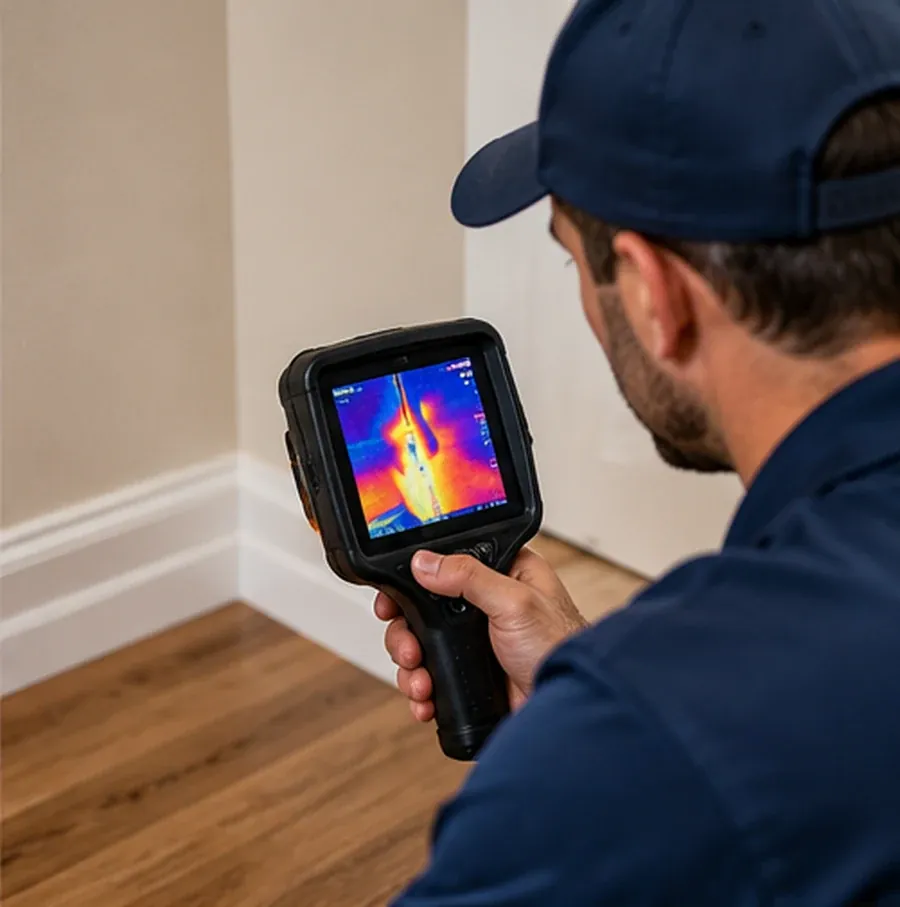
- "Is water escaping, and where?" — a leak location and diagnostic assessment.
- "Is my foundation moving?" — a licensed structural engineer or qualified foundation professional.
- "Is there mold, and how should it be cleaned up?" — follow EPA guidance, or consult a qualified mold professional for larger areas.
- "How should the pipe be repaired?" — a licensed plumbing contractor.
Locating the leak first gives each of these professionals better information to work with.
How to reduce the risk of lasting damage
- Act on warning signs early rather than waiting to see if they go away. See 10 warning signs of a slab leak.
- Run a meter check if your bill rises unexpectedly.
- Dry wet materials quickly and keep the area ventilated.
- Get the leak located and repaired, so the moisture source is removed.
- Keep exterior drainage working: gutters clear and soil sloping away from the foundation.
The bottom line
A slab leak can damage flooring, raise indoor moisture, and in some cases affect the soil beneath your home. It does not automatically mean foundation failure, and a crack alone does not mean you have a leak. The smart move is to take persistent symptoms seriously, get the leak located, and bring in a structural professional if there are signs of movement. If you are noticing symptoms now, read what to do if you suspect a slab leak.
Concerned about a possible slab leak in Whittier? Call Precision Slab Leak Detection at (562) 358-3136 to talk through what you are noticing and how an assessment would work for your property.
Frequently Asked Questions
No. Many slab leaks are found and repaired without any structural consequences. The risk depends on how long the leak has been running, how much water is escaping, the soil type, drainage, and the foundation design. Flooring and moisture problems are generally more common than structural ones.
Not necessarily. Concrete commonly develops shrinkage cracks as it cures, and many cracks are cosmetic. A crack is more meaningful when it is new or growing and appears alongside other signs such as moisture, warm spots, or rising water use.
Persistent moisture creates conditions in which mold can grow. The EPA advises drying water-damaged materials within 24–48 hours and fixing the source of moisture. If you see or smell mold, address the moisture source and follow EPA cleanup guidance or consult a qualified professional.
For signs of structural movement — such as sticking doors and windows, new diagonal wall cracks, or uneven floors — consider an evaluation by a licensed structural engineer or qualified foundation professional. Leak detection identifies where water is escaping; it is not a structural assessment.
Sources
- U.S. Environmental Protection Agency. A Brief Guide to Mold, Moisture, and Your Home.
- Foundation Performance Association. Distress Phenomena Often Mistakenly Attributed to Foundation Movement (FPA-SC-03-1).
- County of Los Angeles Department of Public Works. Soils Investigation and Expansive Soil Requirements — Residential Code Manual, Section R401.4.
This article is general educational information, not a diagnosis of any specific property or professional plumbing, legal, insurance, or health advice. Conditions vary; consult qualified professionals for your situation.