Key takeaways
- First decide how urgent it is: is water actively spreading, or are the signs subtle?
- Document what you see and run a simple meter check — it will help everyone who looks at the problem.
- Protect belongings and dry what you can, but do not open floors or concrete to hunt for the leak.
Suspecting a leak under your home's foundation can feel overwhelming. The good news is that a few calm, sensible steps will protect your home, give a professional the information they need, and keep your options open. Here is a practical plan.
Step 1: Decide how urgent it is
Start by sorting your situation into one of two categories:
| Situation | What it looks like | Priority |
|---|---|---|
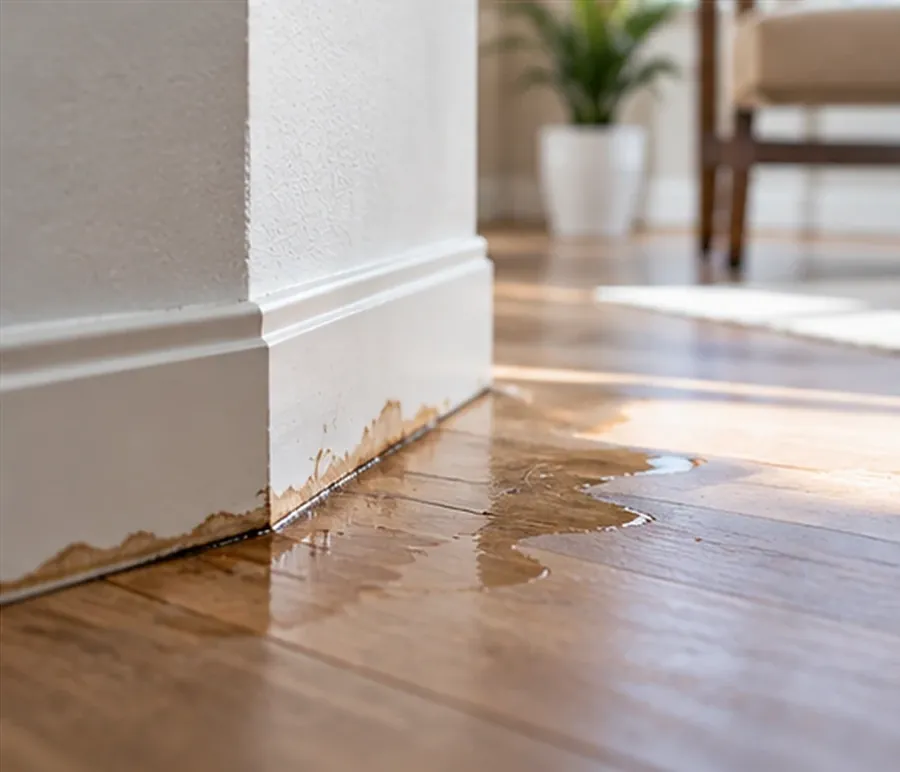
| Active water damage | Water pooling, spreading, or coming up through flooring; wet carpet that keeps getting wetter; water near electrical outlets | Act now: limit damage and call for help |
| Subtle or intermittent signs | Higher bill, a warm patch on the floor, a meter that moves when everything is off, occasional dampness | Document, check, and schedule an assessment soon |
Electrical safety. If water is near outlets, power strips, or appliances, stay clear. Only switch off power at the panel if you can reach it without standing in water. If in doubt, call an electrician or emergency services.
Step 2: Know when — and how — to shut off the water
If water is actively damaging your home, closing the main shutoff valve is usually the fastest way to stop the flow. Many homes have a main valve where the supply line enters the house, often near the front hose bib, in the garage, or near the water heater; there is also a valve at the meter, which is often the utility's equipment. Locations vary widely, so find yours before an emergency if you can.
- Turn the valve slowly and gently. Older valves can be stiff or fragile. If it will not turn, do not force it.
- Remember that closing the main shuts off water to the entire house.
- If you suspect a hot-water line and will keep the water off for a while, follow your water heater manufacturer's guidance — many recommend turning the heater off or to a vacation setting when the supply is shut off.
- If you cannot find or operate the valve, contact your water provider or a plumber.
Whether shutting off the water is the right call depends on your property and circumstances. If the signs are subtle and nothing is being damaged, you may reasonably keep water on while you arrange an assessment.
Step 3: Document the symptoms
Good notes make a professional assessment faster and more focused. They are also useful if you later make an insurance claim. Record:
- Where: rooms and specific spots where you see dampness, feel warmth, or hear water.
- When: when you first noticed it and whether it is getting worse.
- Photos and video: wide shots and close-ups, with dates.
- Bills: your last several water bills, ideally compared with the same period last year.
- Plumbing history: any previous leaks, repairs, or repiping, and the approximate age of the home.
Step 4: Check the water meter
A meter check helps confirm whether water is escaping from the pressurized supply system. With every fixture and water-using appliance off — including ice makers and irrigation — note the meter reading and look at the low-flow indicator. The City of Healdsburg suggests not using any water for 30 minutes and then comparing readings; if the indicator is spinning while all water is off, that suggests a leak. Our guide to checking for unexplained water usage explains the process in detail.
Before you attribute meter movement to a slab leak, rule out toilets (a dye test is easy) and irrigation.
Step 5: Protect your belongings and flooring
- Move furniture, rugs, electronics, and boxes away from damp areas.
- Lift wet area rugs and lay them flat somewhere they can dry.
- Use towels to absorb standing water and run fans or a dehumidifier to help drying.
- Put aluminum foil or plastic blocks under furniture legs on damp carpet to prevent staining.
Speed matters. The U.S. EPA advises that water-damaged areas and items should be dried within 24–48 hours to prevent mold growth, and stresses that fixing the water problem is the key to mold control.
Step 6: Avoid creating unnecessary damage
It is tempting to start pulling up tile or cutting into drywall to find the source. In most cases, that does more harm than good:
- Water travels, so the wettest spot is not always above the leak.
- Removing flooring rarely exposes the pipe, which is typically below or within the concrete.
- Unnecessary demolition adds cost and may complicate an insurance claim.
Leave tile, wood, and concrete in place until the leak has been located.
Step 7: Get the right kind of help
Who you call depends on what you know:
- Source visible and reachable (under a sink, at the water heater): a licensed plumber can usually go straight to the repair.
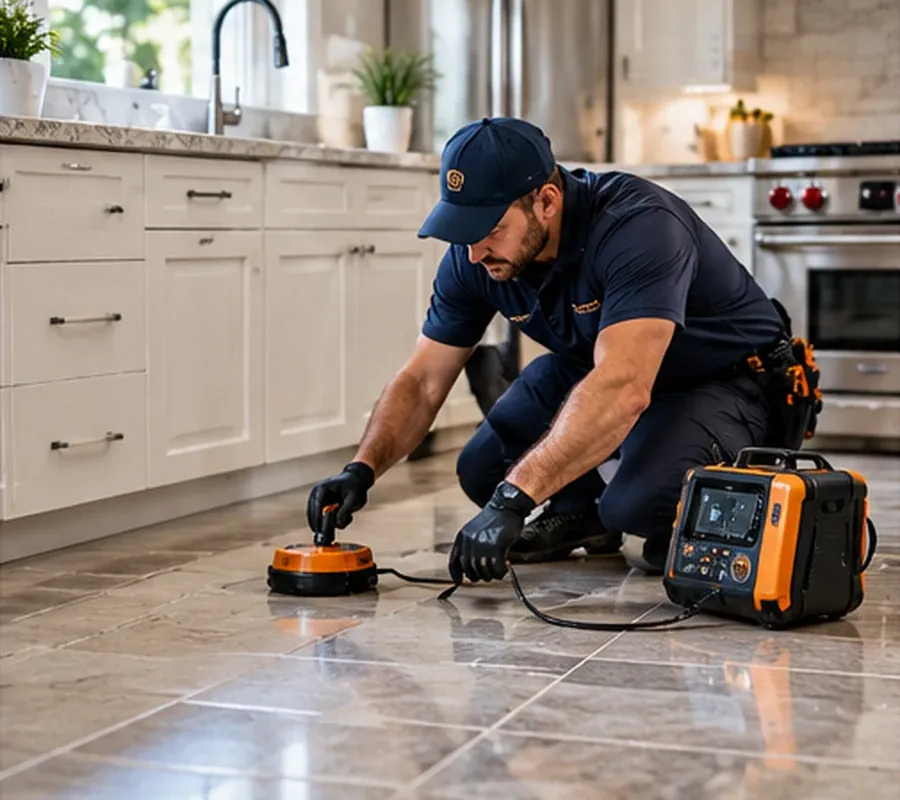
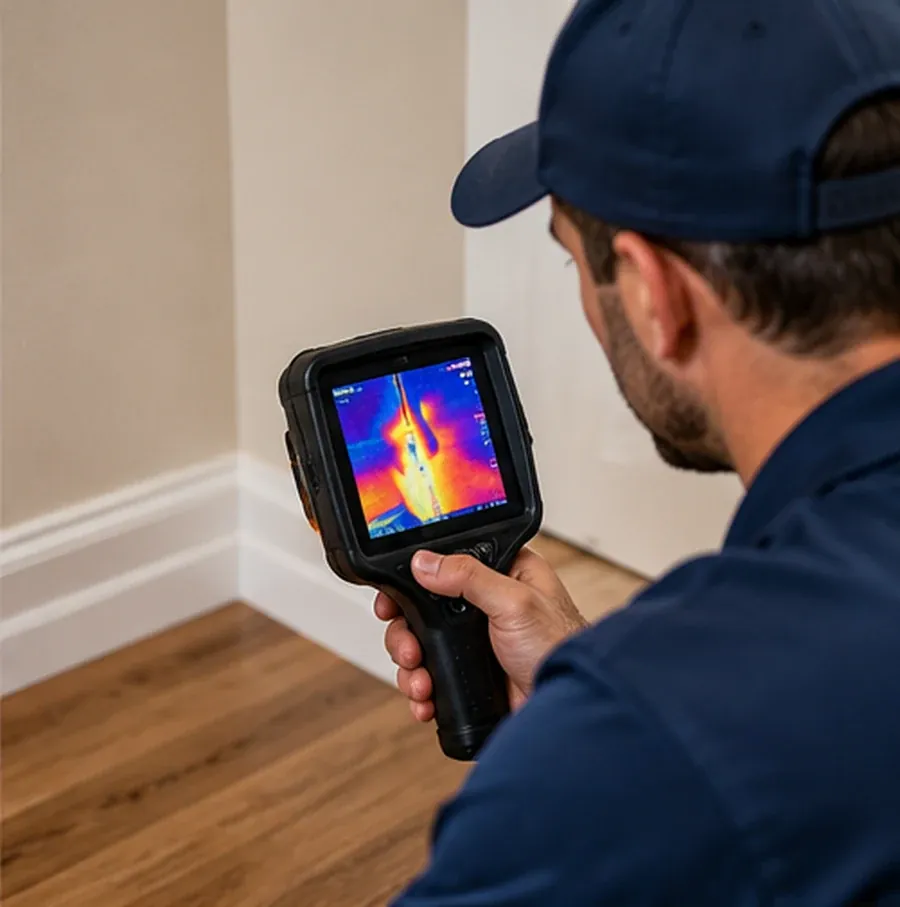
- Source hidden, evidence points under the floor: a slab leak detection assessment can narrow down the leak location so the repair can be targeted.
- Water near electrical systems, sewage backup, or structural concerns: contact the appropriate professional or emergency service promptly.
Step 8: Review your insurance
If there is visible damage, look at your homeowners policy and consider contacting your insurer or agent. The California Department of Insurance advises homeowners to report damage, photograph it, keep receipts, and make reasonable temporary repairs to prevent further damage — and not to throw away damaged items until the adjuster says so. Coverage varies widely; our article on homeowners insurance and slab leaks explains the key distinctions.
The bottom line
When you suspect a slab leak, focus on three things: limit damage, collect good information, and get the leak located before any repair begins. A calm, methodical response protects your home and helps you make better decisions about what comes next.
Concerned about a possible slab leak in Whittier? Call Precision Slab Leak Detection at (562) 358-3136 to talk through what you are noticing and how an assessment would work for your property.
Frequently Asked Questions
If water is actively damaging your home, shutting off the main valve is a sensible way to limit damage while you arrange help. If the signs are subtle, you may not need to shut off water immediately, but you should arrange an assessment promptly. Remember that shutting off the main also stops water to the whole house.
In many cases, yes, if there is no visible damage and the leak seems small. Keep an eye on damp areas, limit unnecessary use, and shut off the main if you see water spreading. If you are unsure, ask the professional you are scheduling with.
If you suspect a hot-water leak and plan to shut off the main water supply for a while, check your water heater manufacturer's instructions. Many recommend turning the heater off or to a vacation setting when the water supply is shut off. If you are unsure, ask a plumber.
No. Removing flooring rarely reveals the exact leak location and can create unnecessary damage and cost. Wet carpet or rugs can be lifted to dry, but leave tile, wood, and concrete in place until the leak is located.
Review your policy and consider contacting your insurer or agent early, especially if there is visible damage. The California Department of Insurance advises reporting damage promptly and documenting it with photos.
Sources
- U.S. Environmental Protection Agency. A Brief Guide to Mold, Moisture, and Your Home.
- City of Healdsburg, California. Read Your Water Meter and Identify Leaks.
- California Department of Insurance. Residential Property Claims Guide.
- U.S. Environmental Protection Agency, WaterSense program. Fix a Leak Week.
This article is general educational information, not a diagnosis of any specific property or professional plumbing, legal, insurance, or health advice. Conditions vary; consult qualified professionals for your situation.