Key takeaways
- Start with your bills, then use the water meter to check whether water is moving when nothing should be running.
- Rule out the usual suspects — toilets, faucets, irrigation, appliances — before suspecting a slab leak.
- A meter test tells you whether water is escaping, not where. Locating a hidden leak needs professional tools.
An unexpectedly high water bill is one of the most common reasons homeowners start to suspect a hidden leak. Before you assume the worst, there is a simple, systematic way to check what is going on. All you need is your recent bills, access to your water meter, some food coloring, and about an hour.
Hidden leaks are worth checking for. The U.S. EPA's WaterSense program estimates that household leaks can waste nearly 1 trillion gallons of water annually nationwide, and that the average household's leaks can account for more than 9,300 gallons per year.
Step 1: Review your water bills
Look at the last several bills and note:
- Usage, not just cost. Rates change, so compare the amount of water used (often shown in units, CCF, or HCF) rather than dollars.
- The same period last year. Summer irrigation and houseguests can raise use naturally.
- Billing period length. A longer period means more usage.
- Estimated vs. actual reads. An estimated read followed by an actual one can make one bill look unusually high.
Many California utilities bill in units of 100 cubic feet. The City of Hayward explains that one billing unit equals 100 cubic feet, or 748 gallons. A jump of several units with no change in habits is worth investigating.
Step 2: Understand your water meter
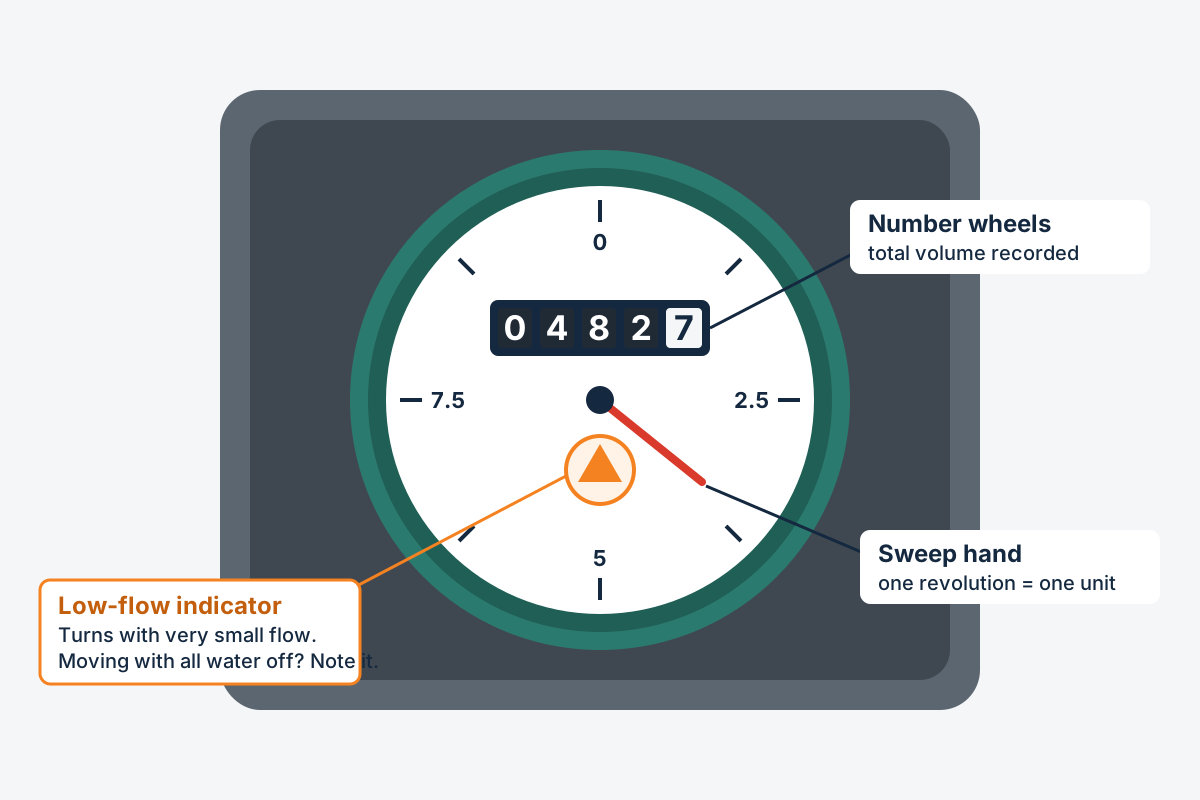
Most residential meters have three useful parts:
- Number wheels show the total volume recorded, similar to a car odometer.
- A sweep hand moves as water flows; one full turn equals a set volume.
- A low-flow (leak) indicator turns with very small flows. According to Hayward's guide, any amount of water moving through the meter will register, so even small leaks show up.
Some newer meters are digital and display flow on a screen; check your provider's instructions for how to read them.
Finding the meter. In many neighborhoods the meter sits in a concrete box near the curb or sidewalk. Lift the lid carefully with a tool and gloves, watch for insects, and never tamper with the meter or the utility-side valve.
Step 3: Turn off everything that uses water
For the test to be meaningful, nothing in or around the house should be using water. Check:
- Faucets, showers, and tubs
- Toilets (let any refill finish)
- Dishwasher and washing machine
- Refrigerator ice maker and water dispenser
- Water softener or filtration system regeneration cycles
- Evaporative coolers, pool or spa auto-fill
- Irrigation controllers and drip systems
The City of Healdsburg's guide specifically reminds residents to turn off ice makers and all outdoor water use.
Step 4: Run the meter test
- Write down the full meter reading and note the position of the sweep hand. Placing a pin or small mark next to the hand makes movement easier to see.
- Look at the low-flow indicator. If it is turning with everything off, note it.
- Do not use any water for a set period. The EPA suggests checking the meter before and after a two-hour period when no water is being used; Healdsburg suggests 30 minutes. Longer tests can reveal smaller leaks.
- Read the meter again. If the reading changed or the sweep hand moved, water is flowing somewhere.
Step 5: Narrow it down
If the meter moved, work through the common sources:
Toilets
Toilets are one of the most common hidden leaks. The EPA recommends putting a few drops of food coloring in the tank; if color appears in the bowl after about 10 minutes, the toilet is leaking. Flush afterward so the dye does not stain.
Faucets, showerheads, and tub spouts
EPA technical guidance describes a simple tub spout check: divert water to the showerhead, wait a minute, and look for more than a few drips from the spout.
Irrigation
Walk the yard looking for soggy areas, especially near valves. Turn the irrigation supply off (if you have a separate valve) and repeat the meter test.
Inside vs. outside the house
If your home has a main shutoff valve where the line enters the house, closing it and watching the meter can help. If the meter still moves with the house shutoff closed, the leak may be on the service line between the meter and the house. If it stops, the leak is likely inside the home's plumbing — which is where slab leaks are found. Only operate valves that turn easily; do not force old valves.
Limitations to keep in mind
- The test shows that water is moving, not where. It cannot distinguish a slab leak from a leak in a wall or the yard.
- Drain leaks will not show. Drain lines are not pressurized, so they do not register on the meter when fixtures are off.
- Intermittent use can fool you. An automatic appliance cycling during the test can make it look like a leak.
- Very small leaks may need longer tests. A short check may miss them.
- Meter quirks happen. If results do not make sense, your water provider can often help interpret them.
When professional investigation is warranted
Consider a professional assessment when:
- The meter moves with every fixture, appliance, and irrigation zone off, and you cannot find the source.
- You also notice warm or damp areas on the floor, musty odors, or the sound of running water.
- Usage keeps climbing despite fixing toilets and fixtures.
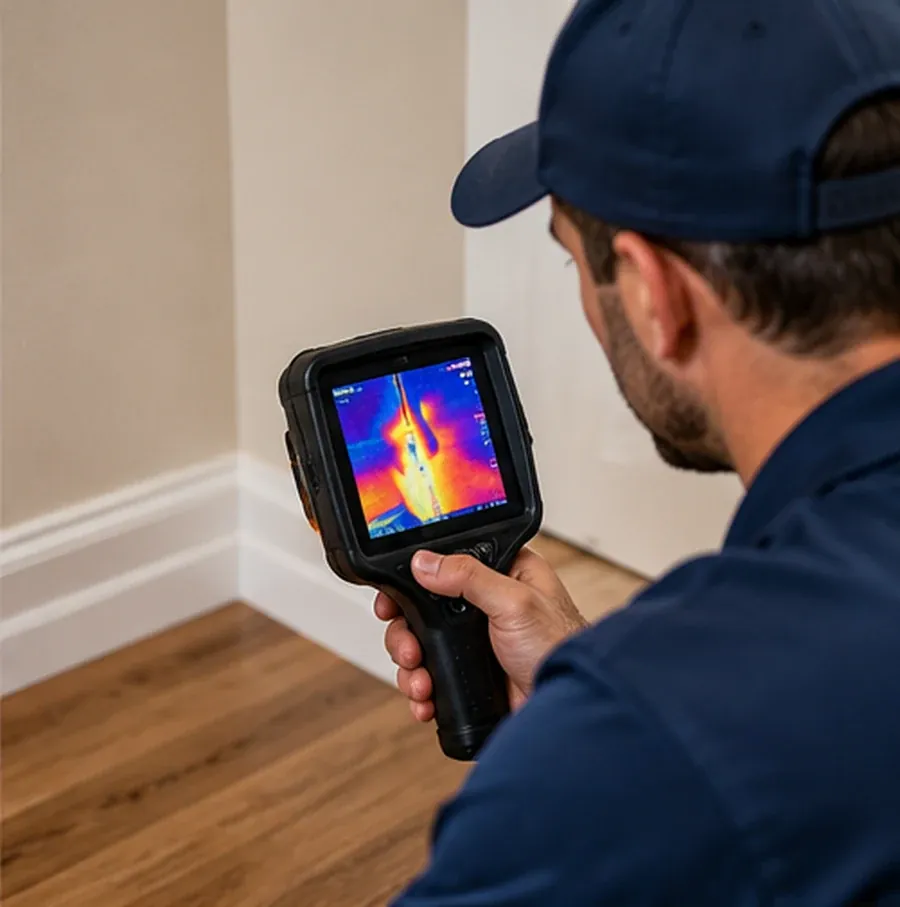
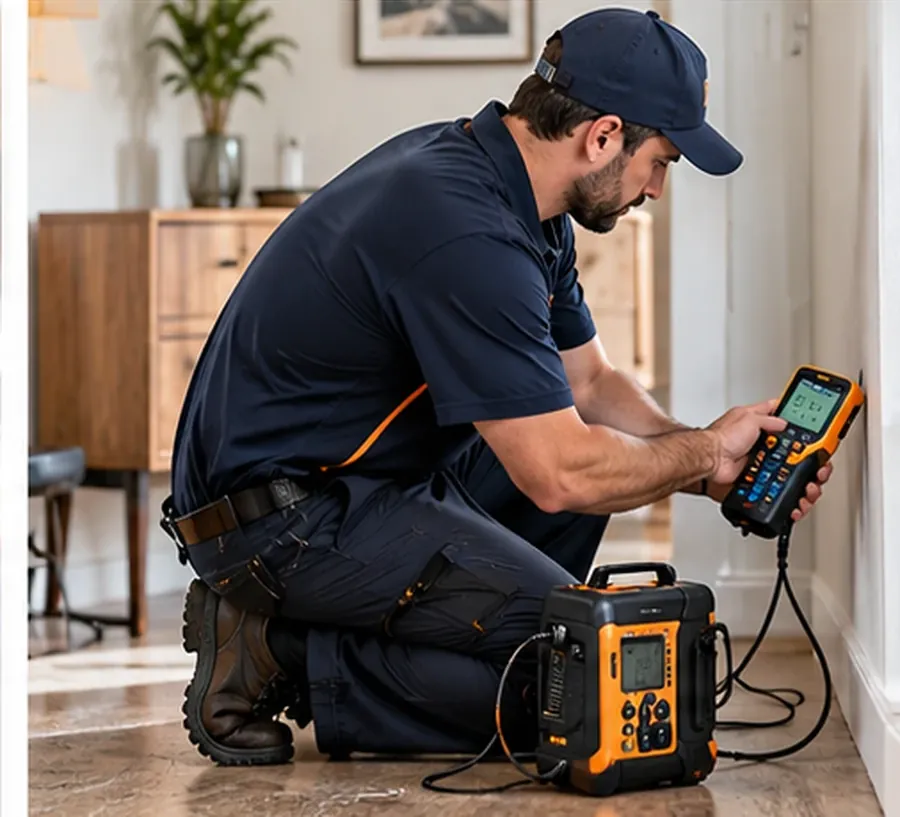
At that point, a leak location and diagnostic assessment can determine which line is losing water and narrow down where. If you suspect the leak is beneath the slab, read 10 warning signs of a slab leak and what to do next.
The bottom line
A careful bill review and a meter test are the best first steps when water use does not add up. They are free, safe when done carefully, and often uncover a simple fix. When they point to a hidden leak you cannot find, that is the moment to bring in professional detection.
Concerned about a possible slab leak in Whittier? Call Precision Slab Leak Detection at (562) 358-3136 to talk through what you are noticing and how an assessment would work for your property.
Frequently Asked Questions
Utility guidance varies. The EPA suggests checking the meter before and after a two-hour period with no water use; some utilities, such as the City of Healdsburg, suggest 30 minutes. A longer test can reveal smaller leaks, but even a short check of the low-flow indicator is useful.
Not necessarily. Meter movement shows that water is flowing somewhere on the supply side — a toilet, irrigation valve, ice maker, water softener, or a leak in the service line could all be responsible. Rule those out before concluding the leak is under the slab.
In many Southern California homes, the meter is in a box near the curb or sidewalk in front of the property. The lid can be heavy and there may be insects or debris inside, so open it carefully. If you cannot find or access it, contact your water provider.
Many water providers now offer online usage data or alerts. If yours does, hourly or daily usage overnight can be a helpful clue. Check your bill or your provider's website to see what is available.
Use care: lids can be heavy, edges can be sharp, and spiders or other pests may be inside. Wear gloves, use a tool to lift the lid, and never tamper with the meter or the utility's valve.
Sources
- U.S. Environmental Protection Agency, WaterSense program. Fix a Leak Week.
- U.S. Environmental Protection Agency. Free of Leaks — Technical Reference Manual for WaterSense Labeled Homes (EPA-832-F-23-016, July 2023).
- City of Hayward, California. How to Read Your Water Meter.
- City of Healdsburg, California. Read Your Water Meter and Identify Leaks.
This article is general educational information, not a diagnosis of any specific property or professional plumbing, legal, insurance, or health advice. Conditions vary; consult qualified professionals for your situation.