Key takeaways
- Leaks fall into a few broad groups: visible leaks, fixture leaks, supply-line leaks, drain or sewer leaks, and slab leaks.
- The water meter is the best home test for pressurized supply leaks — it usually will not reveal a drain leak.
- Symptoms overlap, so an assessment is often the only reliable way to confirm a leak beneath concrete.
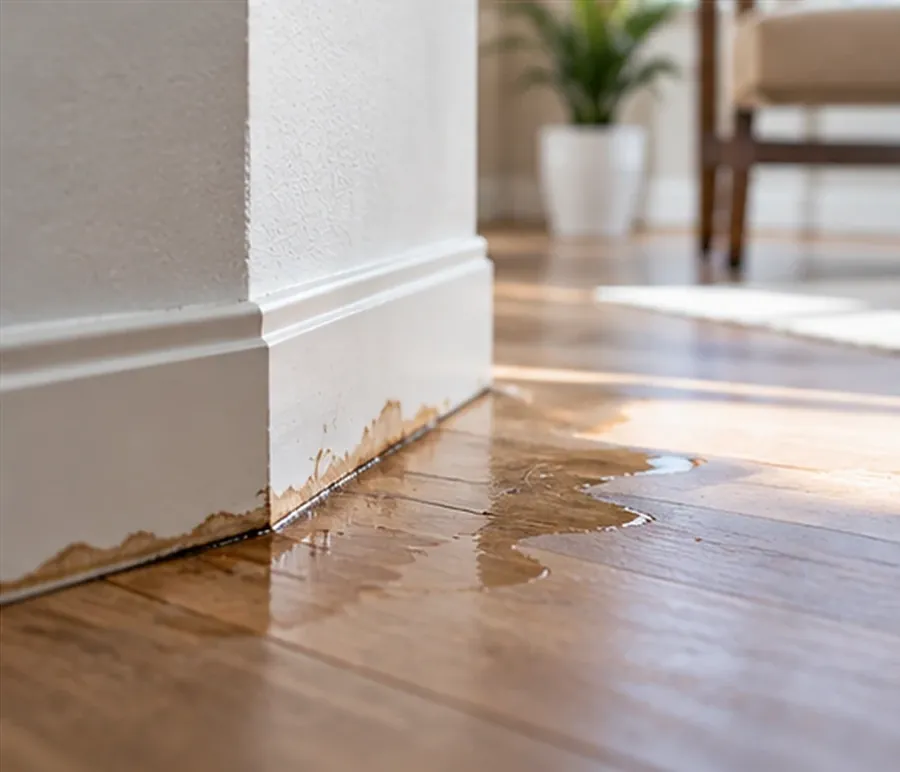
"Is it a slab leak?" is one of the first questions people ask when they find a damp floor or a surprising water bill. Sometimes the answer is yes. Often, though, the culprit is something simpler — a toilet flapper, a loose supply hose, or a drain connection. Understanding how the different kinds of leaks behave can save you time, money, and unnecessary worry.
The main types of household leaks
Visible plumbing leaks
These are the leaks you can actually see: a drip under the kitchen sink, a wet spot below the water heater, water around the washing machine hose. They are usually the easiest to find and fix. The giveaway is that the water is concentrated around a fixture or connection you can reach.
Fixture leaks
Fixture leaks happen inside the fixture itself — a toilet that silently refills, a dripping faucet, a tub spout that runs while the shower is on. They waste water and raise bills but rarely cause damage to floors or walls. EPA WaterSense guidance highlights worn toilet flappers, dripping faucets, and leaky showerheads among the most common household leak sources.
Supply-line leaks
Supply lines carry pressurized water to fixtures. A leak can occur anywhere along the route — inside a wall, in the attic, under a cabinet, or in the service line between the meter and the house. Because the water is under pressure, supply leaks run continuously, which is why they tend to show up on the water meter.
Drain and sewer leaks
Drain lines carry wastewater away by gravity. They only carry water when something is draining, so a drain leak may only produce symptoms after showers, laundry, or dishwashing. Signs can include odors, slow drains, or dampness that appears after heavy water use. Drain leaks generally do not make the water meter move when everything is off.
Slab leaks
A slab leak is a leak in a line that runs in or beneath the concrete foundation. It can be a pressurized supply line (hot or cold) or, in some homes, a drain line. Supply-side slab leaks tend to produce the classic pattern: steady water loss, a moving meter, and — for hot-water lines — warm areas on the floor.
Side-by-side comparison
| Leak type | Typical clues | Meter moves with water off? | Good first check |
|---|---|---|---|
| Visible leak | Drips or pooling at a reachable connection | Often, if on the supply side | Look under sinks, behind appliances, around the water heater |
| Fixture leak | Toilet refilling, dripping faucet, higher bill | Often (toilets especially) | Toilet dye test; check faucets and tub spout |
| Supply-line leak in a wall or ceiling | Stains, bubbling paint, damp drywall, sound of water | Usually yes | Meter test; note where stains appear |
| Drain or sewer leak | Odors, dampness after draining, slow drains | Usually no | Watch whether symptoms follow drain use |
| Supply-side slab leak | Higher bill, warm or damp floor, running-water sound | Usually yes | Meter test after ruling out fixtures and irrigation |
This table describes typical patterns, not rules. Real homes do not always follow them.
Why the symptoms overlap
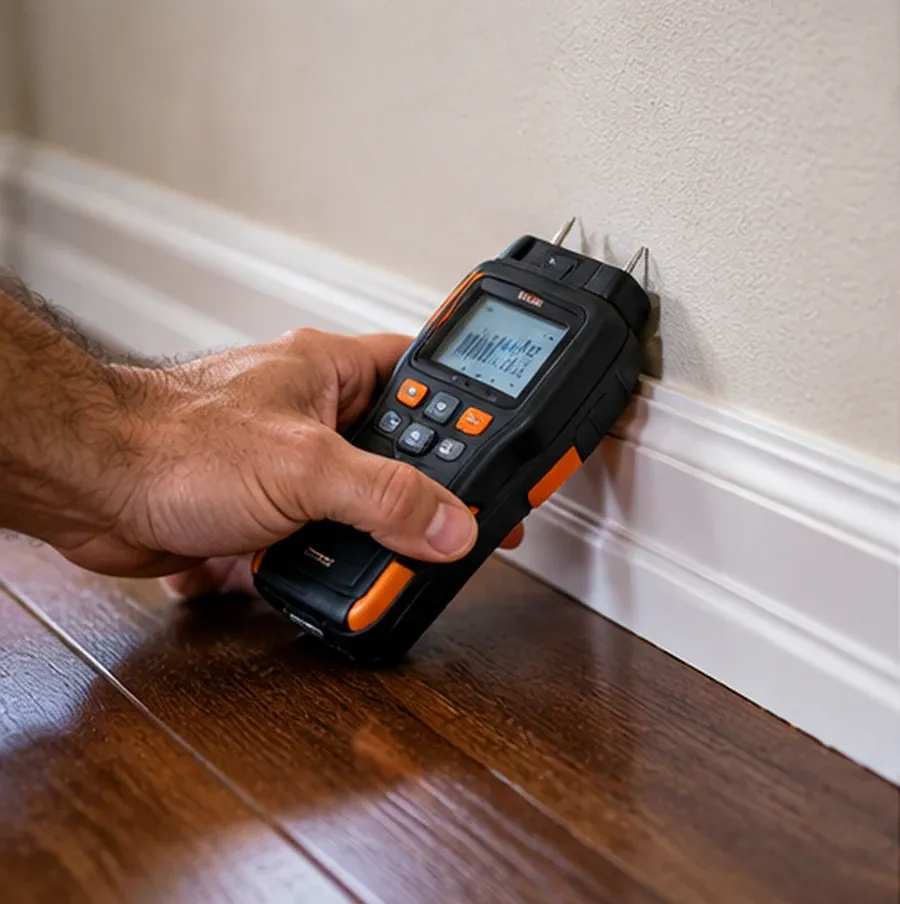
Water travels. A leak in a wall cavity can run down and appear at the base of the wall, looking like it is coming from the floor. Moisture under a slab can wick up into flooring several feet away from the actual leak. A toilet leak and a slab leak can both raise your bill by a similar amount. Even tools have limits: Teledyne FLIR, a thermal camera manufacturer, notes that a pattern that looks like moisture on a thermal image does not guarantee water is present and should be confirmed with a moisture meter.
So while symptoms are valuable clues, they are not definitive diagnostic tests. The goal of self-checks is to rule out the simple explanations, not to prove a slab leak.
A practical way to narrow it down
- Check fixtures first. Dye-test every toilet, look for drips, and check the tub spout when the shower is running.
- Turn off irrigation. Sprinkler and drip systems are a common source of hidden water loss.
- Run a meter test. With every fixture and appliance off, note the meter reading and watch the low-flow indicator. The City of Healdsburg's guidance suggests not using any water for 30 minutes and then comparing readings. Our water-usage guide covers the details.
- Use your house shutoff, if you can do so safely. If the meter keeps moving with the house's main shutoff closed, the leak may be on the service line between the meter and the house rather than inside.
- Map what you see. Note warm areas, damp spots, sounds, and when they occur. Symptoms that follow drain use point toward drain lines; constant symptoms point toward supply lines.
Know your limits. Shutoff valves can be stiff or fragile, especially in older homes. If a valve does not turn easily, do not force it — call a professional.
When the evidence points under the slab
If fixtures and irrigation check out, the meter still moves, and you are noticing floor-level symptoms, a hidden supply leak beneath the slab becomes a real possibility. At that point, professional detection is usually the most efficient next step. A technician can use acoustic listening equipment, electronic detection tools, and a structured diagnostic assessment to narrow down where the water is escaping.
Locating the leak before any repair matters. It reduces the chance of opening the wrong section of floor and gives you clearer information when you compare repair options. Learn more in how professional slab leak detection works.
The bottom line
Most leaks are not slab leaks — but the ones that are can be hard to spot. Start with the easy checks, pay attention to whether the meter moves and whether symptoms follow drain use, and keep notes. If the clues keep pointing beneath the floor, a professional assessment will tell you far more than guesswork.
Concerned about a possible slab leak in Whittier? Call Precision Slab Leak Detection at (562) 358-3136 to talk through what you are noticing and how an assessment would work for your property.
Frequently Asked Questions
Usually not. The meter measures water coming into the property through the pressurized supply system. Drain lines carry used water out by gravity, so a leaking drain typically does not make the meter move when fixtures are off.
It can affect your bill and make the meter's low-flow indicator move, which is why a toilet dye test is one of the first things to check. A toilet leak does not usually cause warm floors or dampness under the slab, though a failed wax ring can wet the floor around the toilet.
No. A warm area is a useful clue, but heating ducts, radiant heat, appliances, and sunlight can warm floors too. It becomes more meaningful when it is new, persistent, and paired with other signs such as higher water or energy use.
If you can see where the water is coming from, a plumber can usually go straight to the repair. If the source is hidden and the evidence points beneath the floor, a leak detection assessment helps locate the problem first so the repair can be targeted.
Sources
- U.S. Environmental Protection Agency. Free of Leaks — Technical Reference Manual for WaterSense Labeled Homes (EPA-832-F-23-016, July 2023).
- U.S. Environmental Protection Agency, WaterSense program. Fix a Leak Week.
- City of Healdsburg, California. Read Your Water Meter and Identify Leaks.
- Teledyne FLIR. How To Detect a Water Leak with Thermal Imaging.
This article is general educational information, not a diagnosis of any specific property or professional plumbing, legal, insurance, or health advice. Conditions vary; consult qualified professionals for your situation.